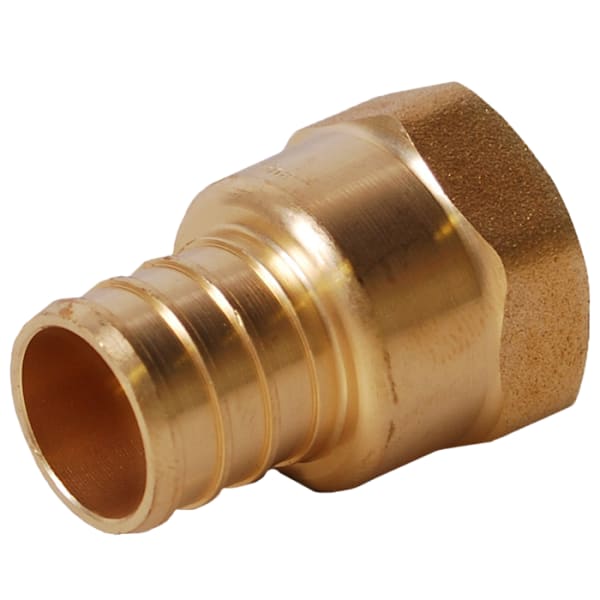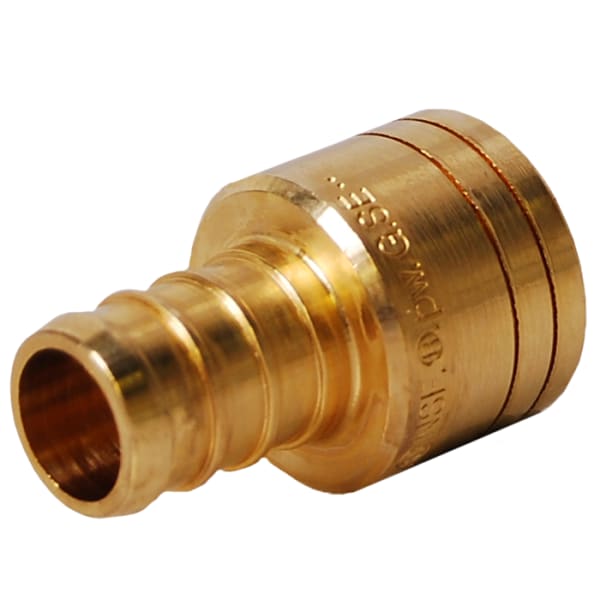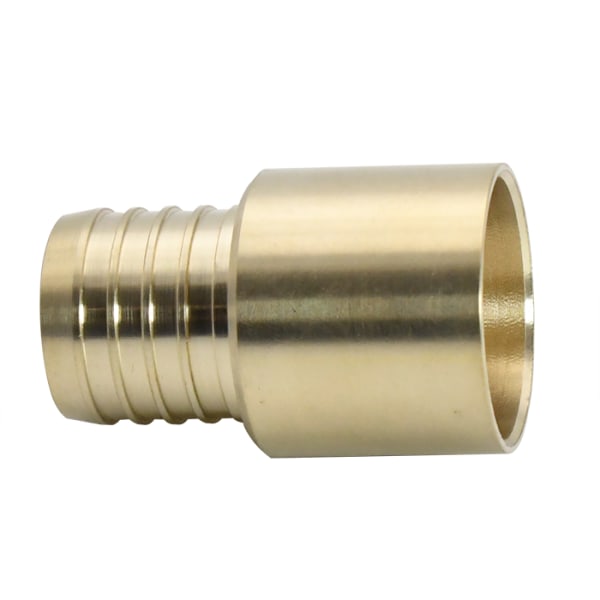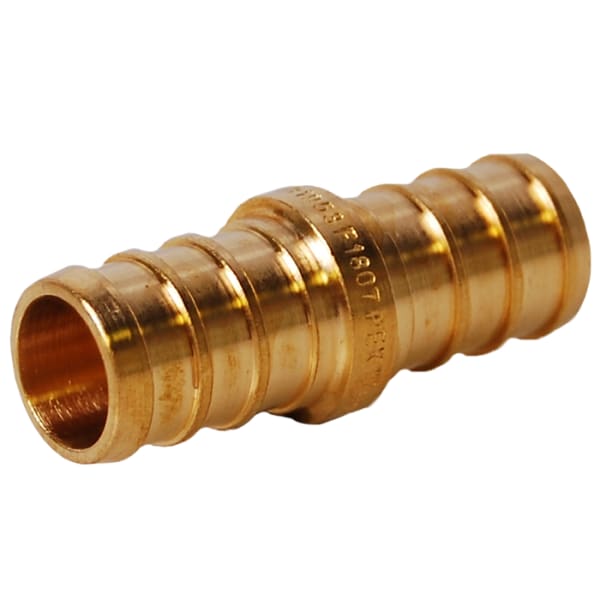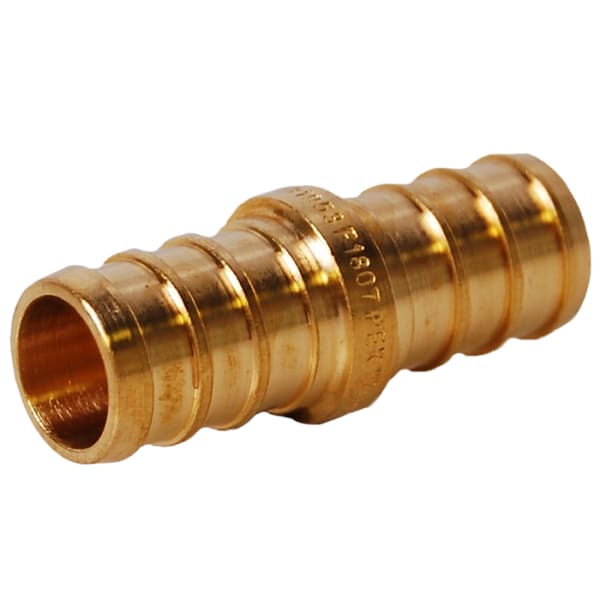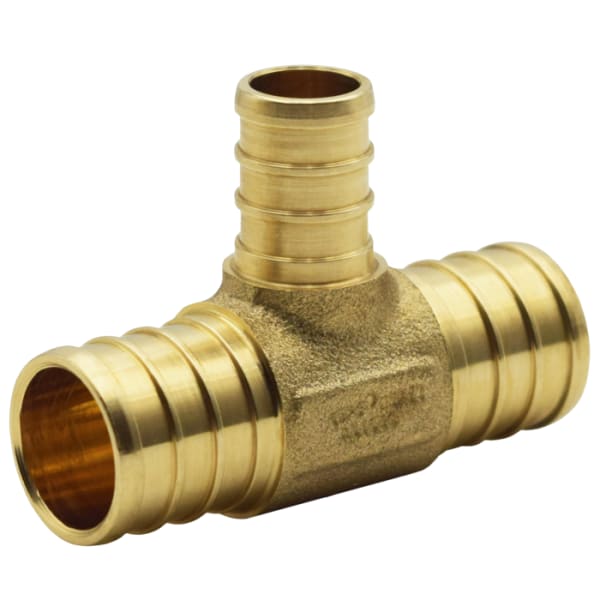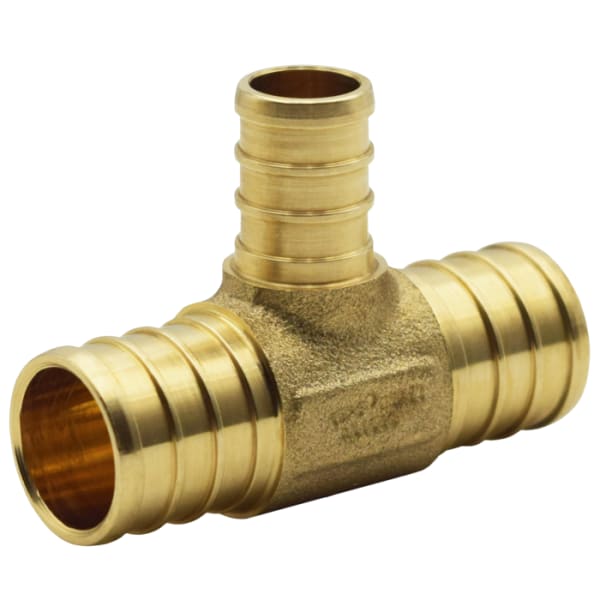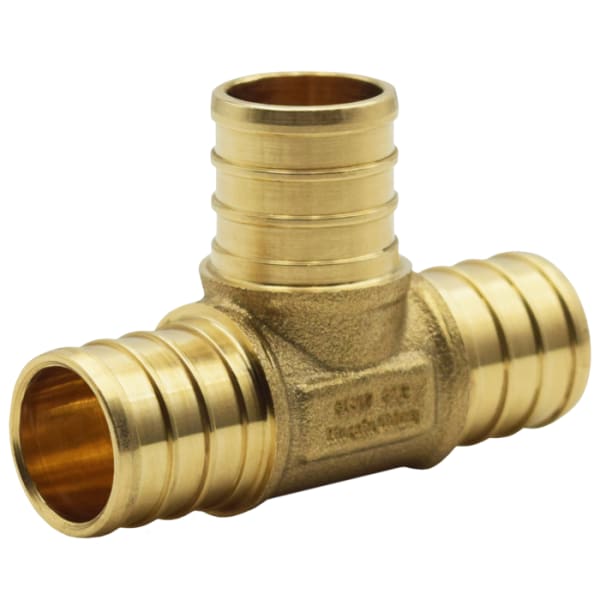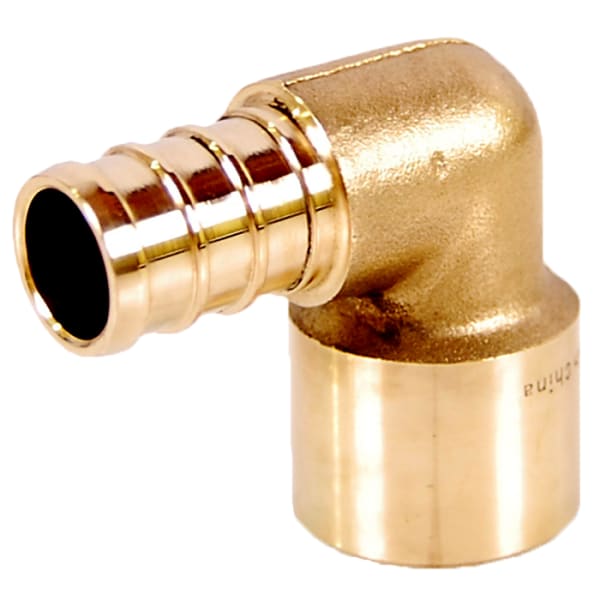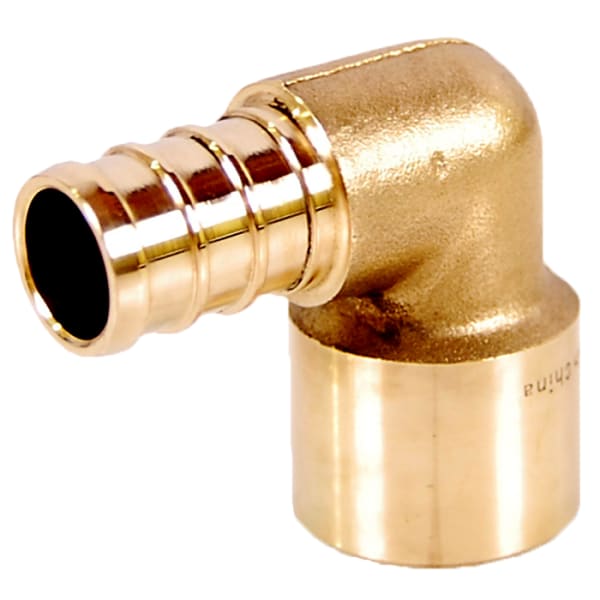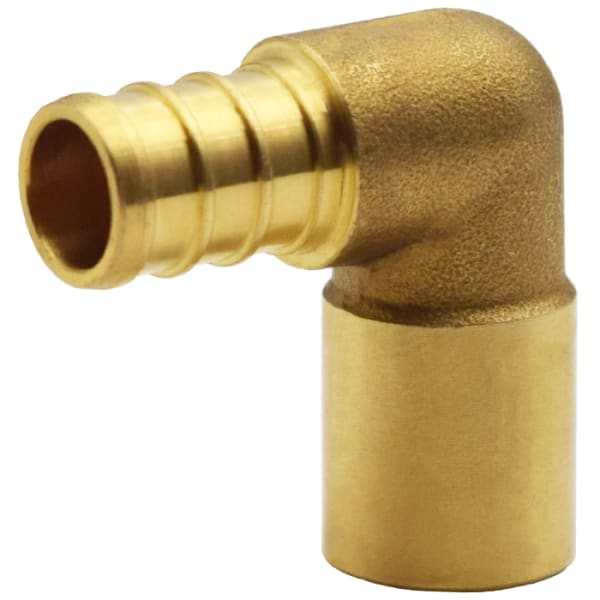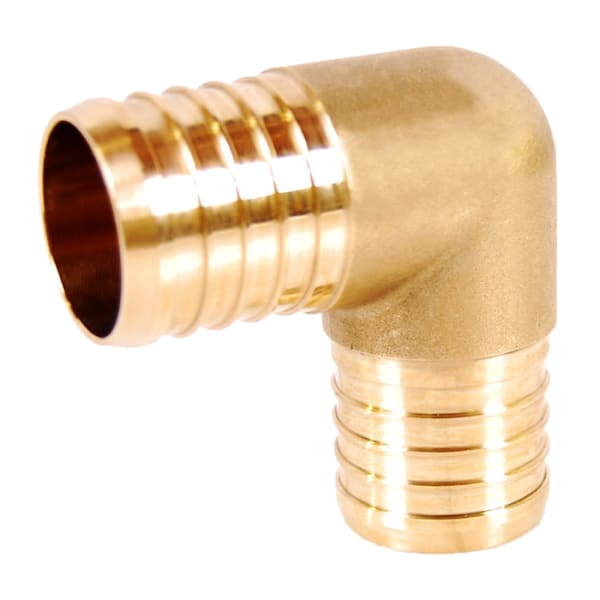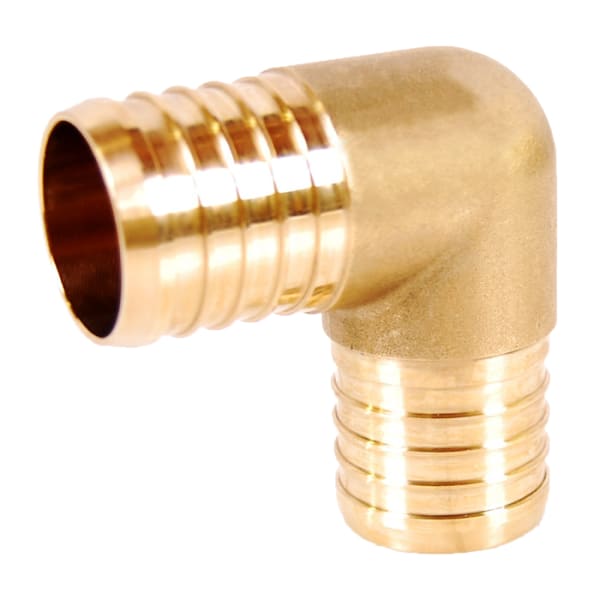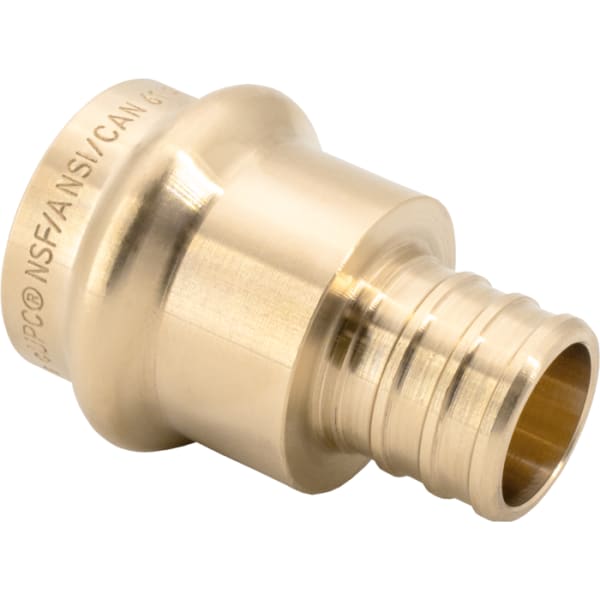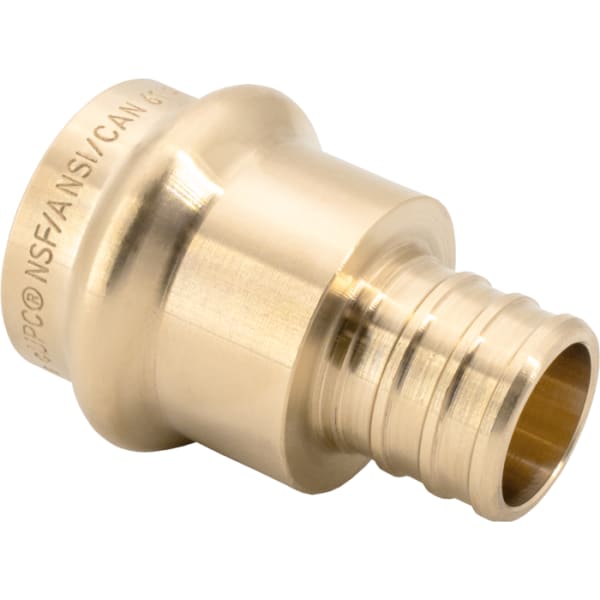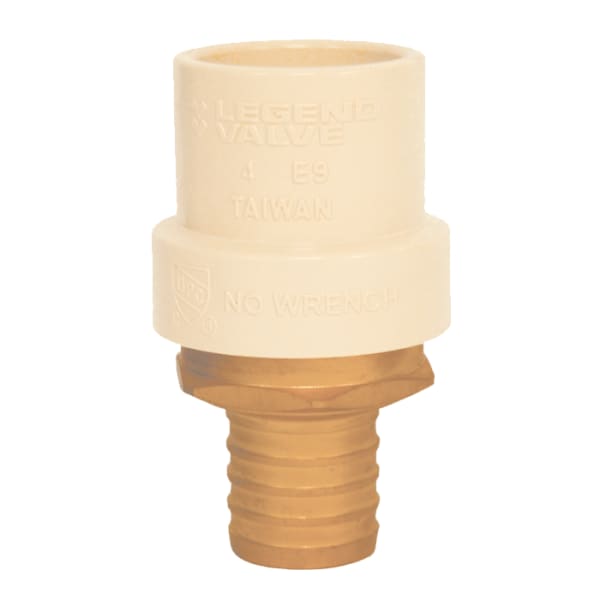
75 PEX crimp fittings and rings — 62 fittings and adapters, 6 copper crimp rings, 5 stainless sleeves and 2 manifolds — from Sioux Chief (32), Legend Valve (30), Viega (6), HeatLink (5) and MrPEX Systems (2), in no-lead brass, copper and composite, 3/8" through 1-1/2".
F1807 names the fitting, not the ring, and that is where the confusion starts. ASTM F1807 covers the barbed metal insert fitting and the copper crimp ring that goes over it. ASTM F2098 covers the stainless steel cinch clamp — and the clamp is designed to grip the same F1807 barb. So one fitting on the shelf accepts two different rings, and each ring needs its own tool: a crimp tool jaws down a copper ring all the way around, a cinch tool pinches a clamp at one ear. Neither tool does the other job. Decide the ring system before you buy the tool, because the fittings will not force the choice for you.
The go/no-go gauge is part of the job, not part of the box. A copper crimp ring that is under-compressed holds pressure on the test and fails months later; one that is over-compressed cuts the tubing. The only way to know is to run the gauge that ships with the crimp tool over every ring — go end passes, no-go end does not. Crimp tools drift out of calibration with use, so a batch that gauges wrong usually means the tool, not the technique.
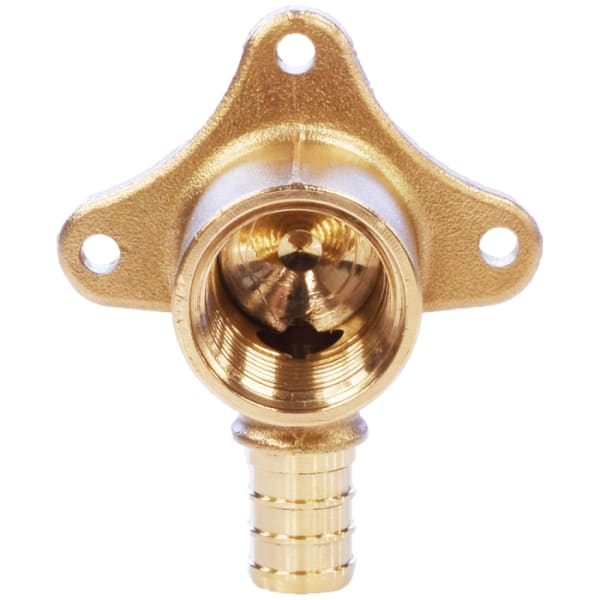
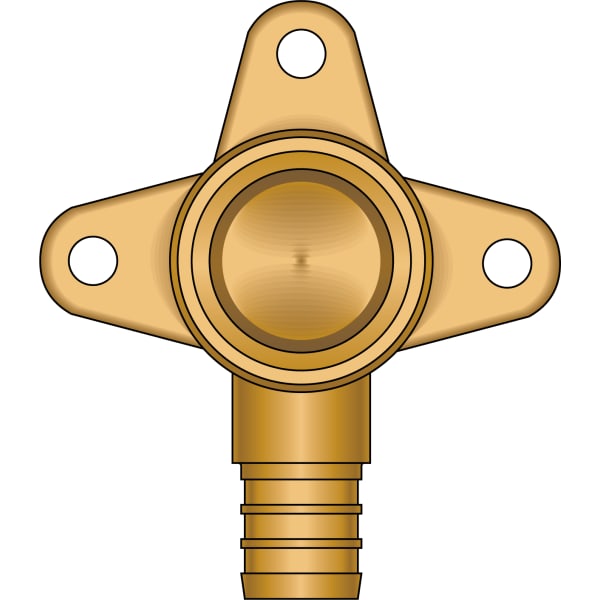
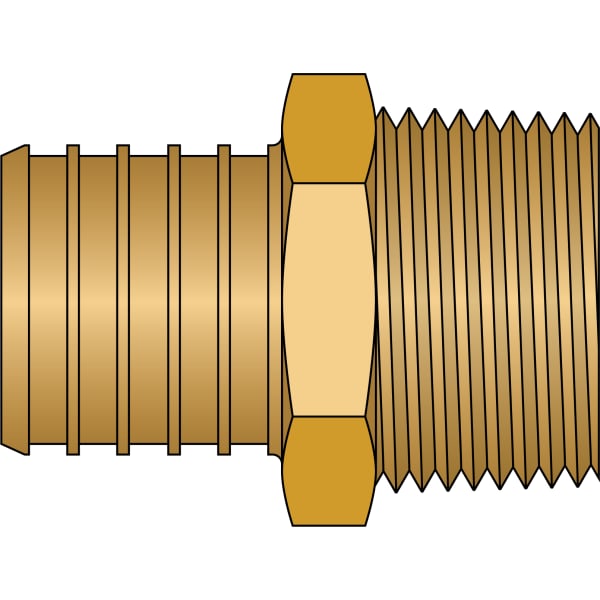
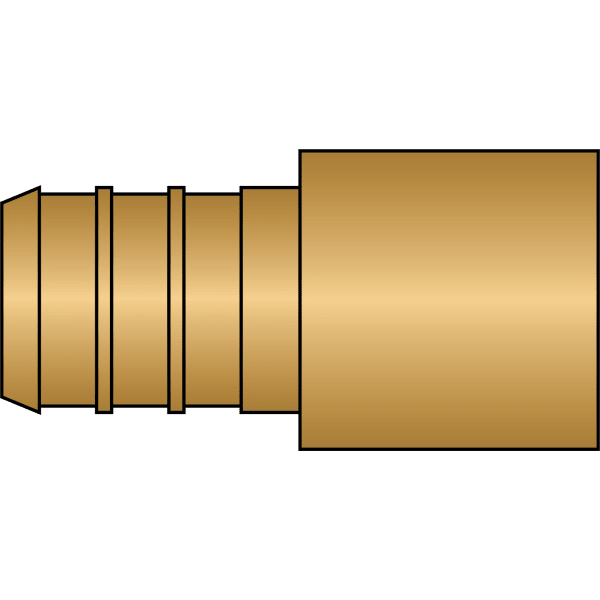
Adapters are what runs out on the truck. The transitions stocked here cover nine different other-ends: sweat and FTG sweat, FIP, MIP, CPVC, PVC, insert barb, press, and polybutylene. That last one matters — Sioux Chief's 645X2G and 645X3G go PEX to 1/2" and 3/4" PB, which is what a repair on a failed polybutylene system needs, and almost nobody stocks it. Drop ear elbows in 1/2" and 3/4" handle the fixture stub-out, where the ear screws to blocking so the stub does not move when someone leans on the trim.
Material is a water chemistry decision more than a price one. No-lead brass and copper are the common insert materials and they are fine in most water. Composite is specified where the water is aggressive enough to attack brass over time, and it also weighs and costs less. What no insert fitting escapes is the bore: a barb sits inside the tubing and narrows it, so a run with many crimp fittings loses more pressure than the same run in F1960 expansion, where the tubing stretches over the fitting instead.
Copper rings and stainless V-sleeves are both stocked in 1/2", 3/4" and 1". Buy rings by the bag rather than by the joint — the ring is the cheapest part of the connection and the one you strand a job without.
Crimp does not cross over to the other PEX systems. F1960 cold expansion, F2159 press and Viega PureFlow press each use their own fittings and their own tool. A crimp fitting will physically enter expansion tubing and it will not seal. Match the tool to the system before the first joint, not after.
Part of PEX fittings, alongside PEX tubing, PEX valves, manifolds and everything PEX.