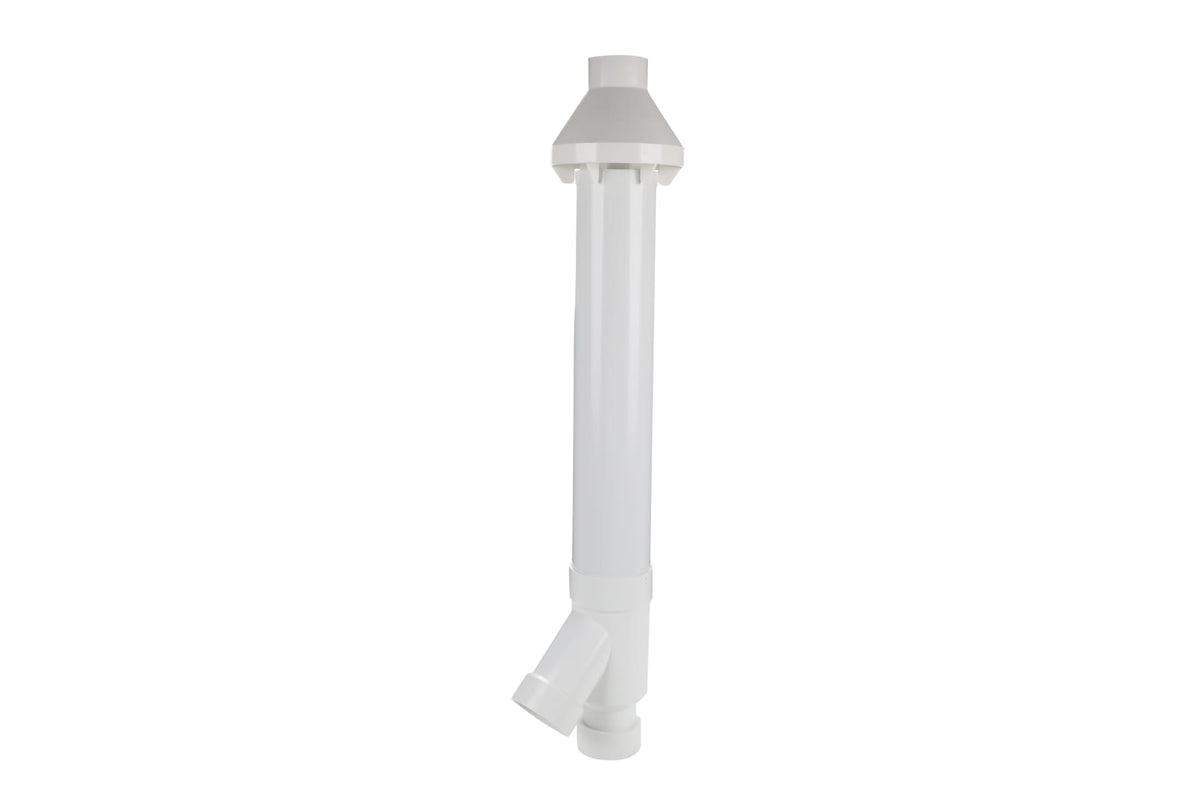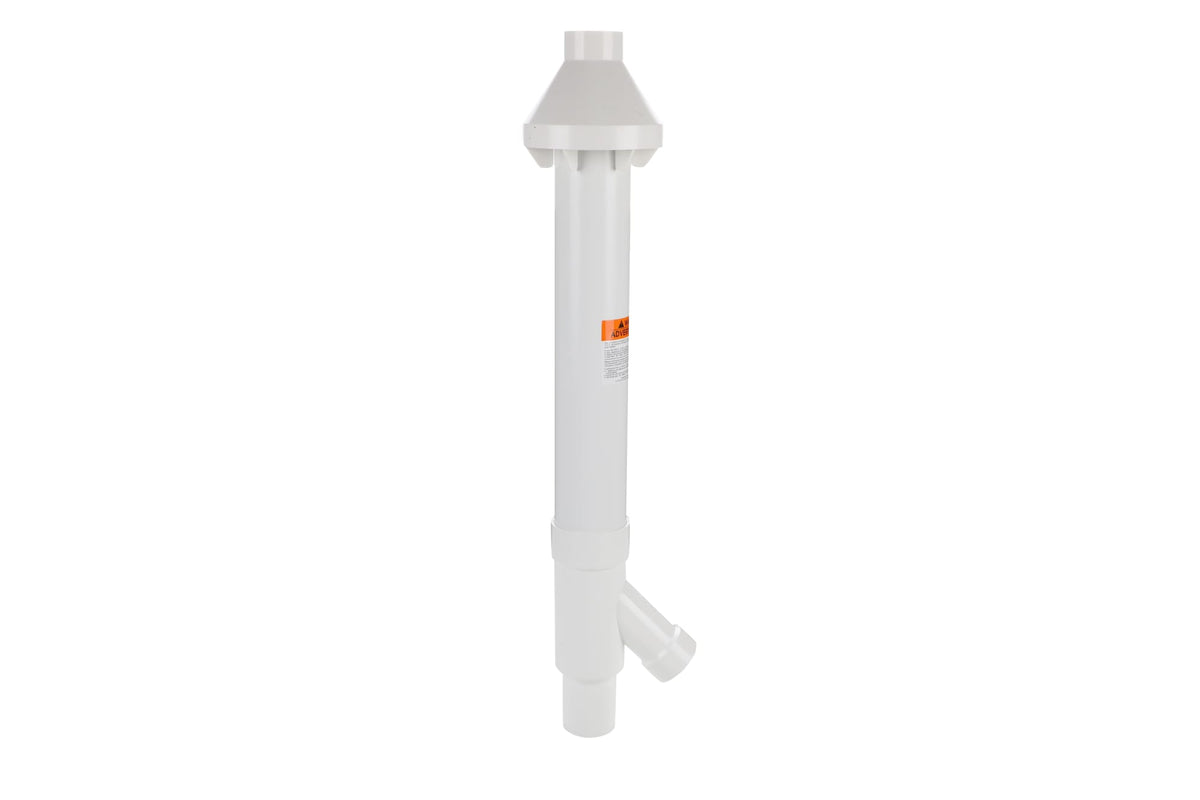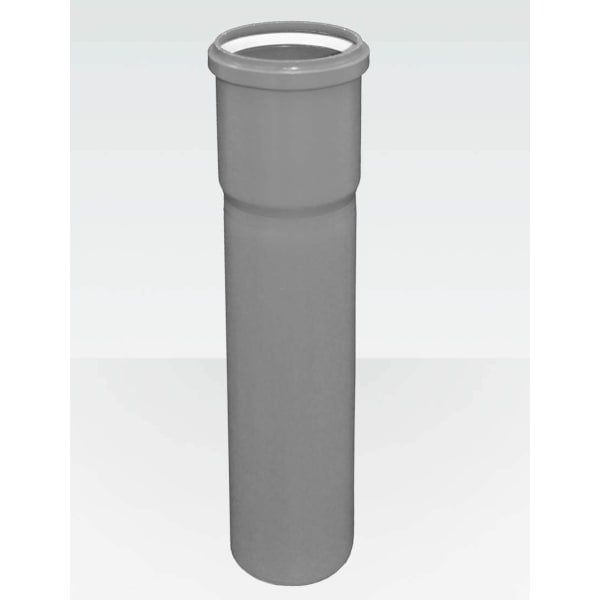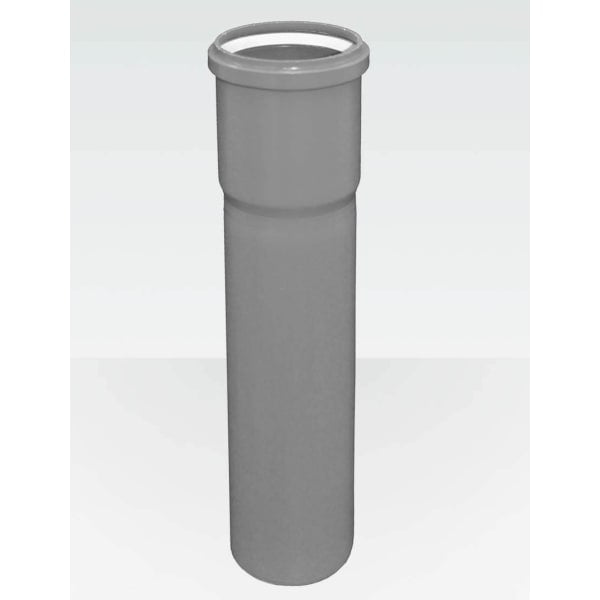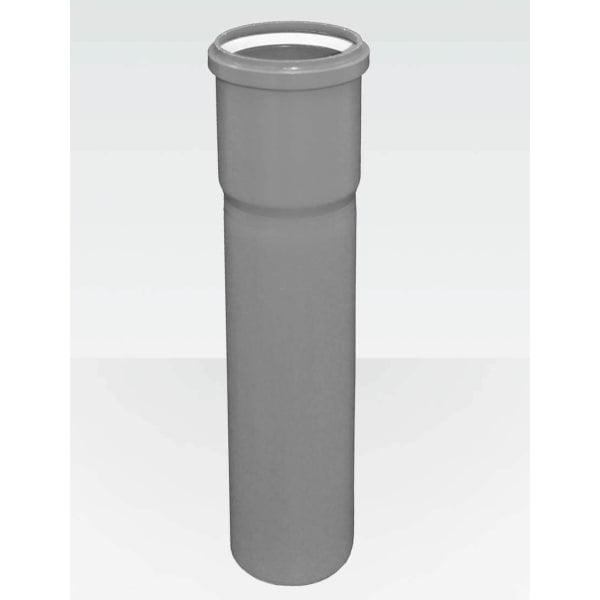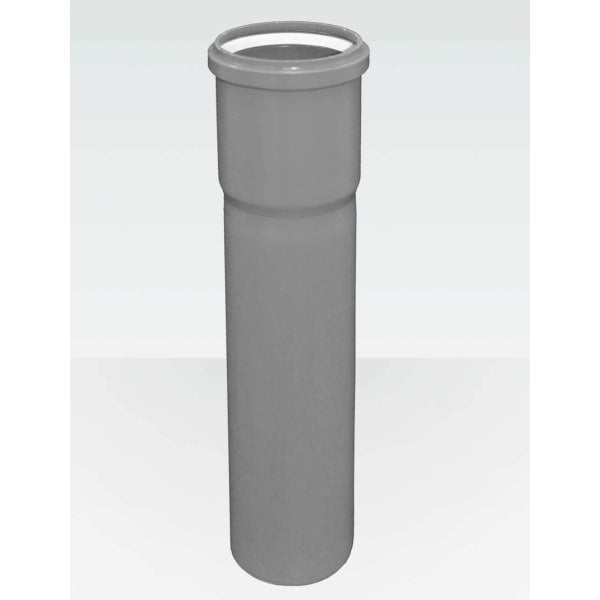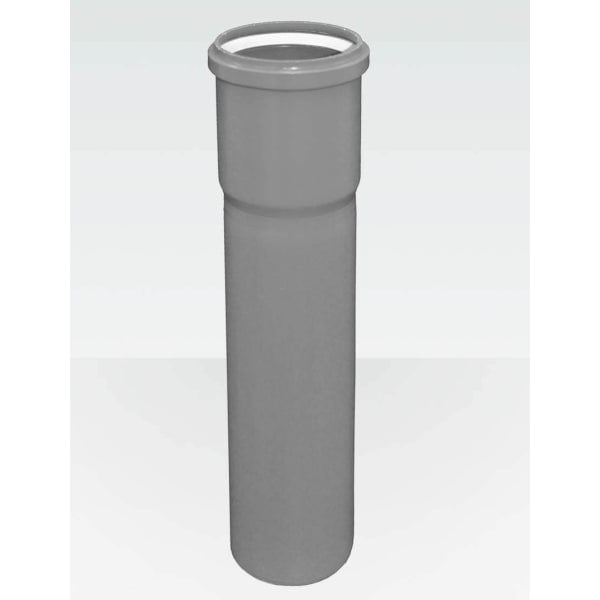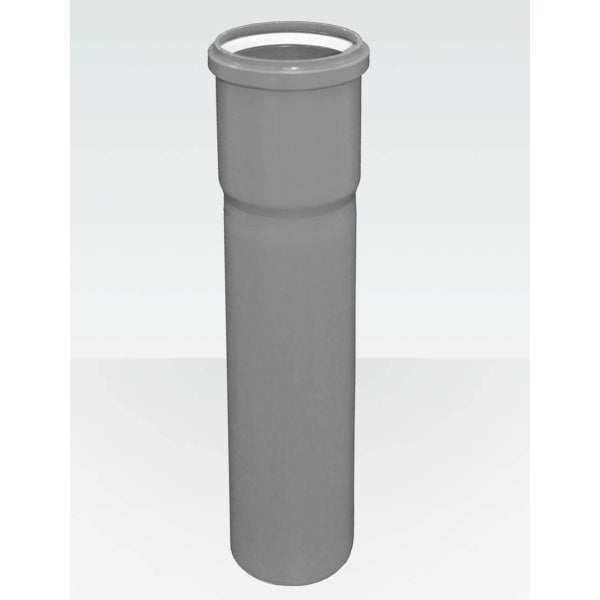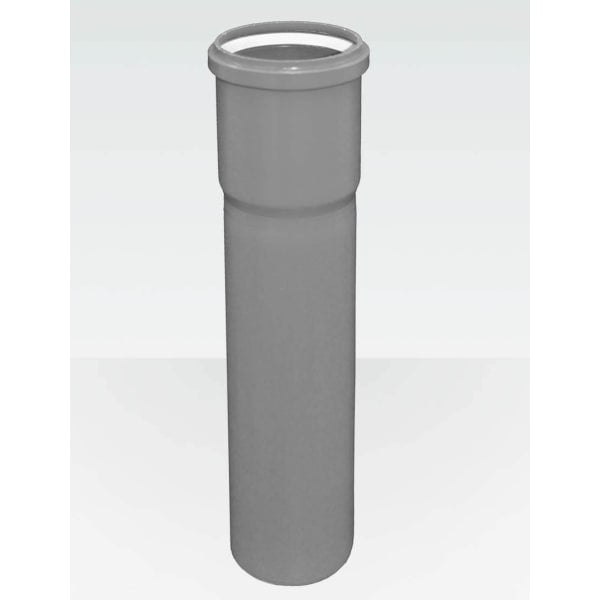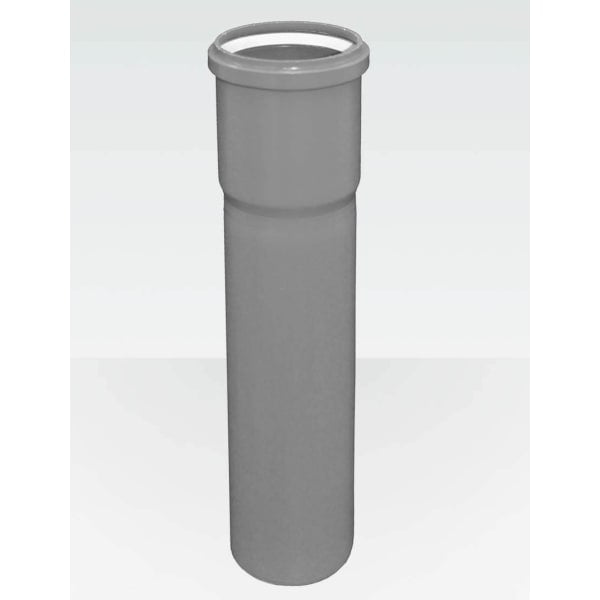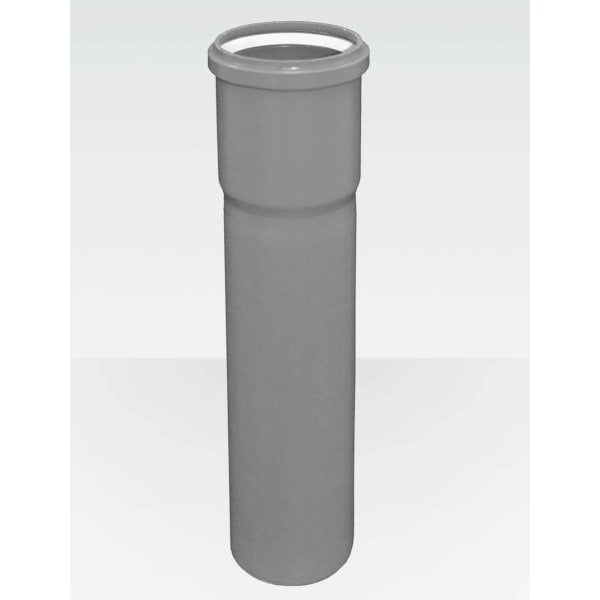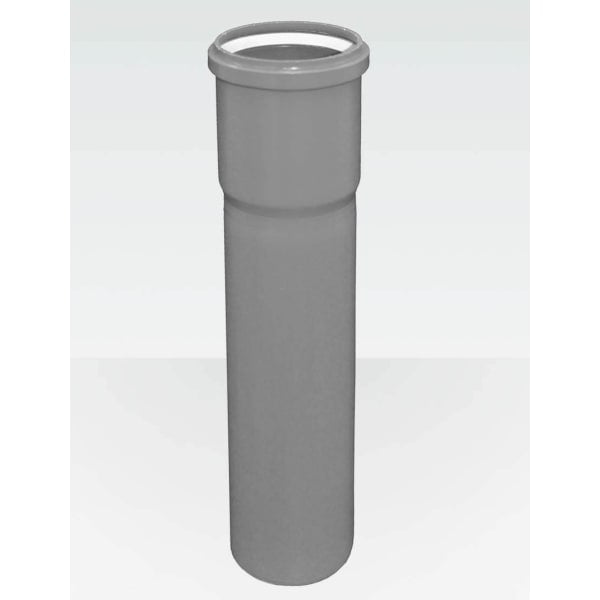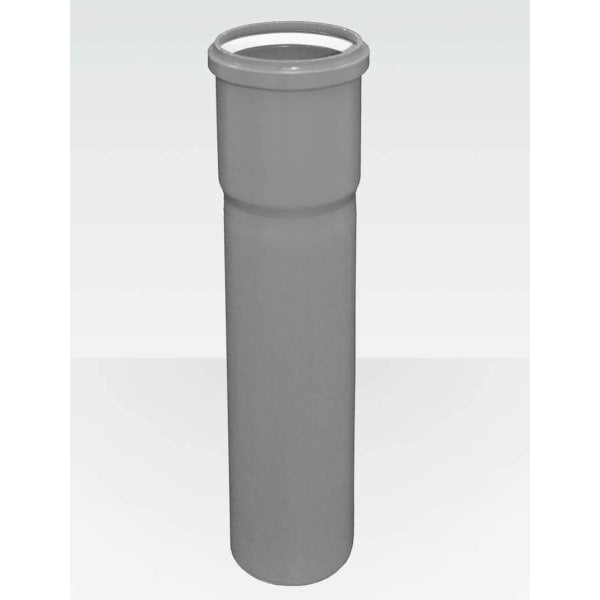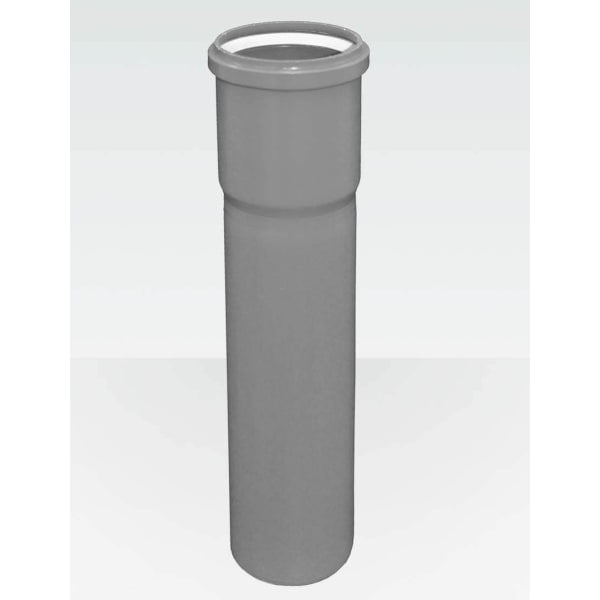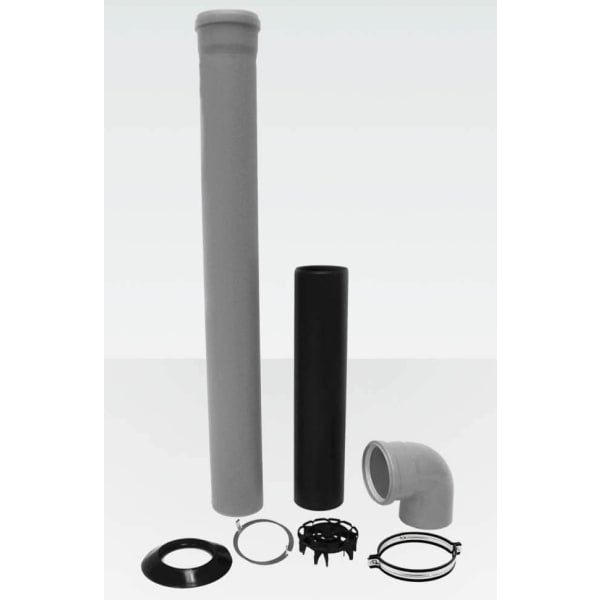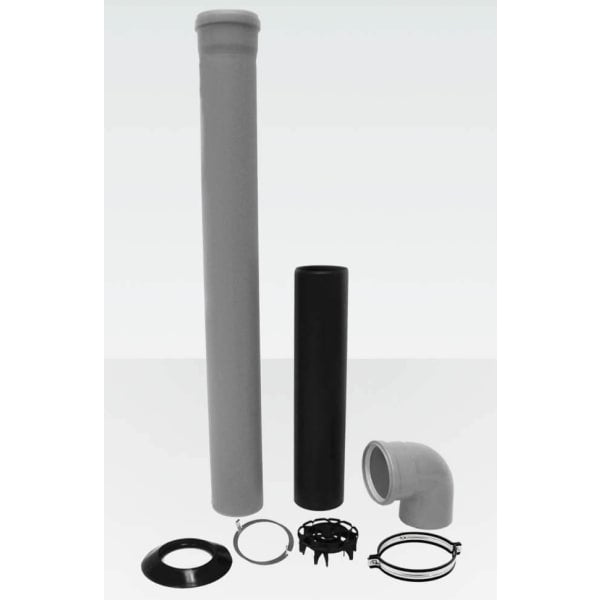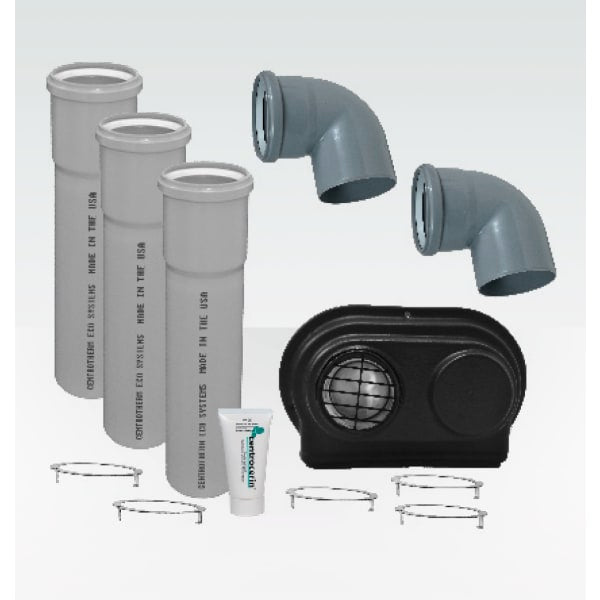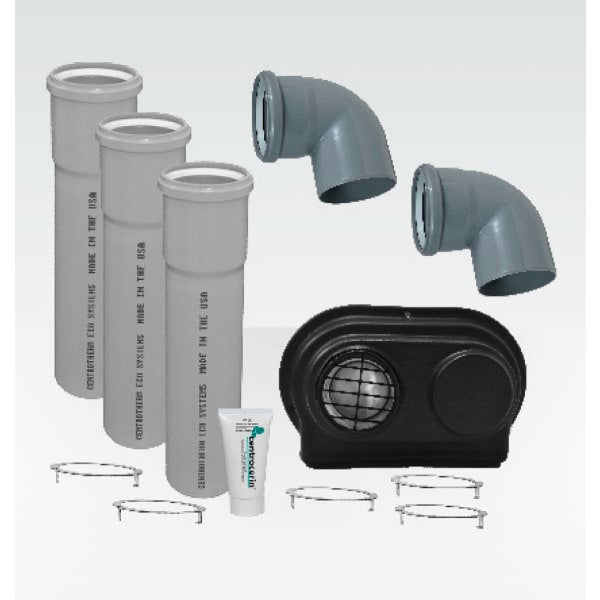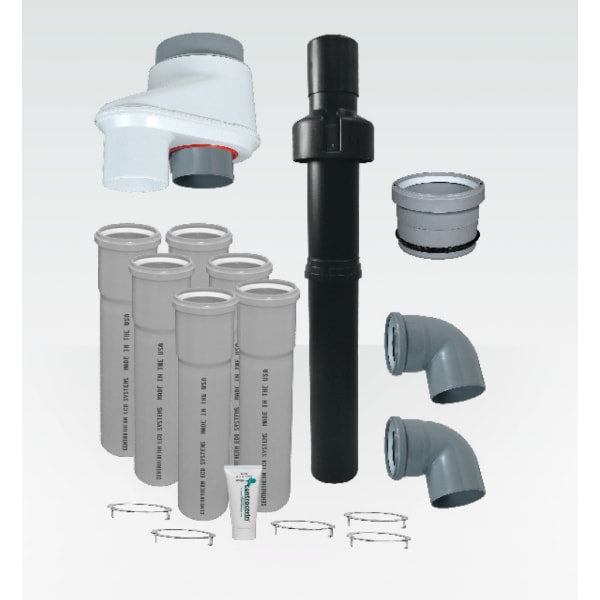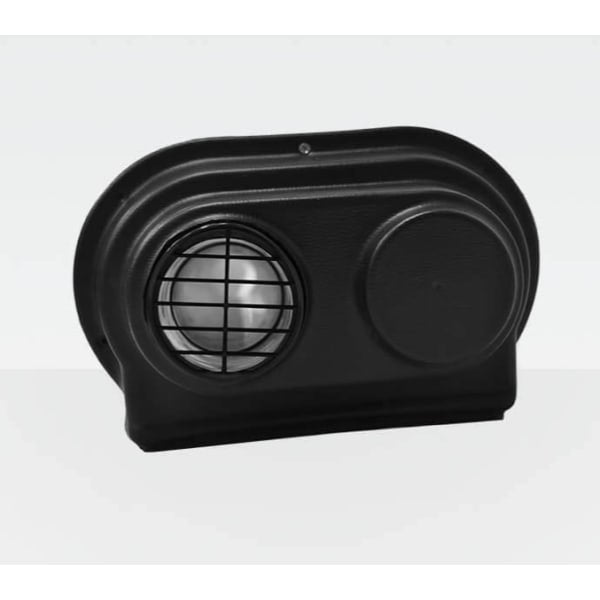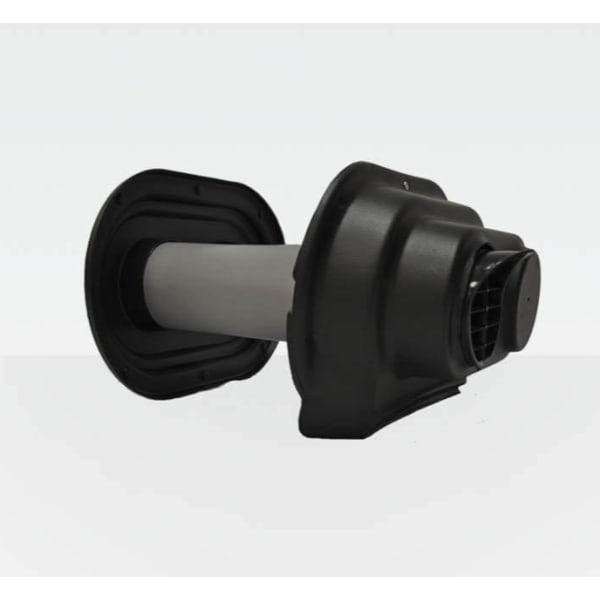
100 venting components for condensing gas appliances: polypropylene single wall (80), water heater vent kits (12), terminations and vent screens (7) and a concentric adapter, from Centrotherm, Noritz, Rheem, US Boiler, IPEX and DiversiTech. Vent pipe and fittings run 2" through 10".
A condensing appliance does not vent like an atmospheric one, and that is the whole reason this category exists. An 80% furnace or an atmospheric water heater sends hot, dry flue gas up a chimney or a B-vent on its own buoyancy. A 95% furnace, a condensing boiler or a tankless heater pulls most of that heat out first, so what leaves the appliance is cool, wet and acidic, and a fan pushes it. It will not rise, it will condense inside the vent pipe, and it will attack anything that is not built for it. That is why these systems are sealed, sloped and fan-rated rather than simply pointed upward.
The appliance manual decides the vent material, not the pipe aisle. Polypropylene systems are listed to UL 1738, the standard written for venting appliances with condensing flue gases — the listing is on the vent system as a system, gaskets and terminations included. PVC and CPVC are pressure-pipe standards; where they are used as vent it is because the appliance manufacturer's instructions permit it, not because the pipe carries a vent listing of its own. Either way the authority is the installation manual for the specific appliance, and mixing a listed system with unlisted parts voids the listing for the whole run.
Single wall or concentric is a penetration decision. Single wall runs exhaust and intake as two separate pipes, which is cheaper and more forgiving to route but needs two holes and a minimum separation at the terminations. A concentric vent carries intake around exhaust in one pipe, so the building gets one penetration and one termination that cannot be wrongly spaced — worth the extra cost through a finished wall, a roof, or anywhere the two terminations would otherwise be hard to place correctly.
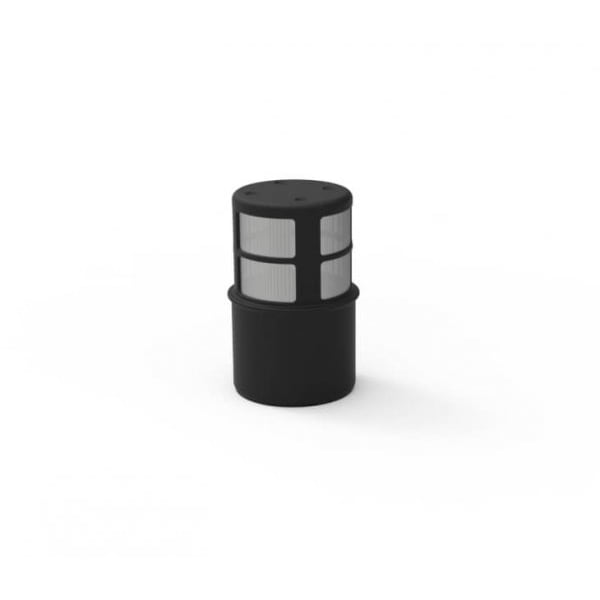
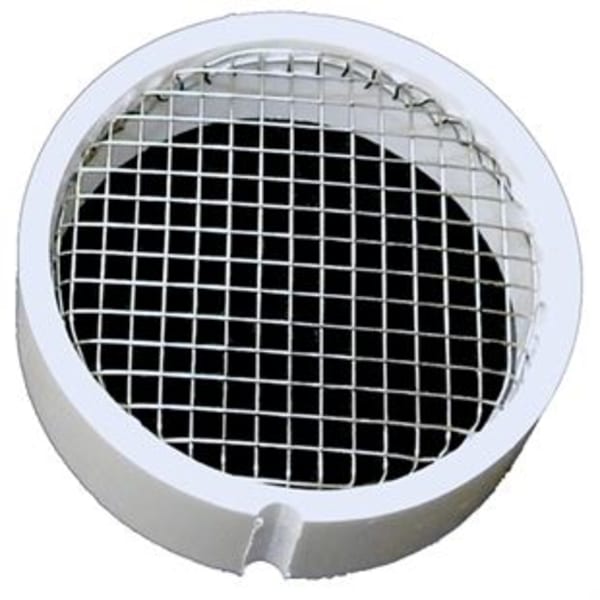
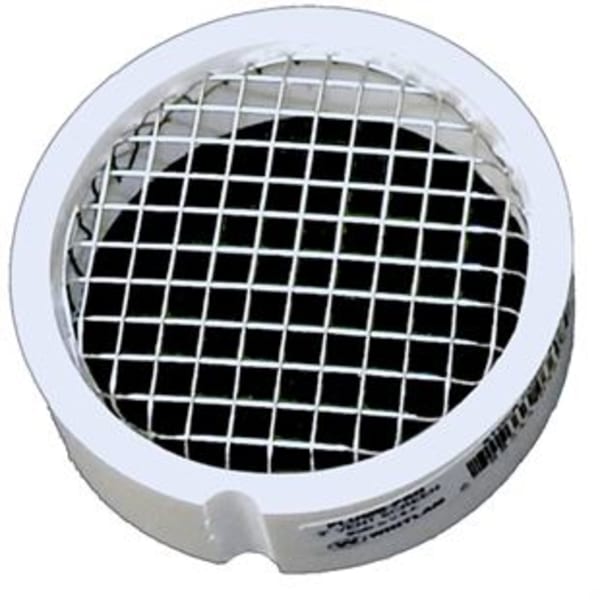
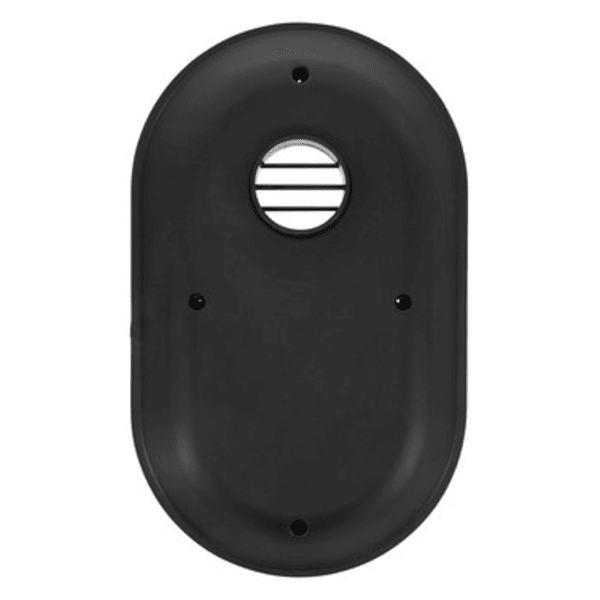
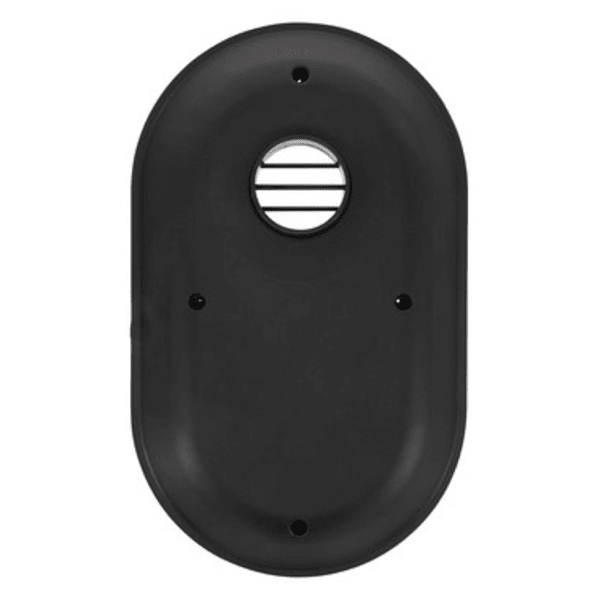
Terminations are where inspections fail. Clearance to windows, doors, soffits, air intakes, gas meters and grade is set by code and by the appliance manual, and low-profile wall terminations exist precisely because those clearances are hard to hit on a tight lot. Bird and rodent screens belong on every outdoor opening; the ones stocked here cover 2" through 8".
Retrofit work usually means relining, not rebuilding. When a condensing appliance replaces an atmospheric one, the existing masonry chimney or B-vent is oversized and now unlined for wet flue gas. Flexible polypropylene liner in 25' and 35' kits drops down the existing chase and terminates at the top, which turns a chimney demolition into an afternoon.
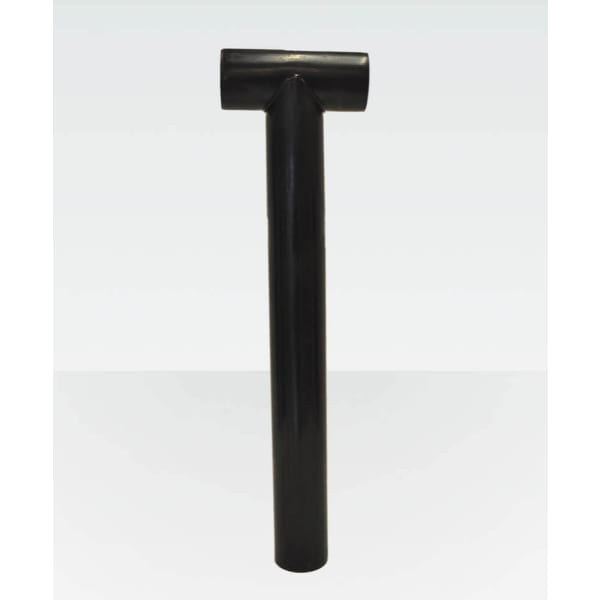
Condensate has to have somewhere to go. Vent runs are sloped back toward the appliance so what forms in the pipe drains to the appliance's own trap, or into a drain tee and siphon where the geometry will not allow it. A vent that traps condensate in a low spot will eventually block, and the appliance will lock out on pressure rather than tell you why.
Venting sits alongside boilers and furnaces, tankless water heaters, condensate pumps and heating and HVAC.