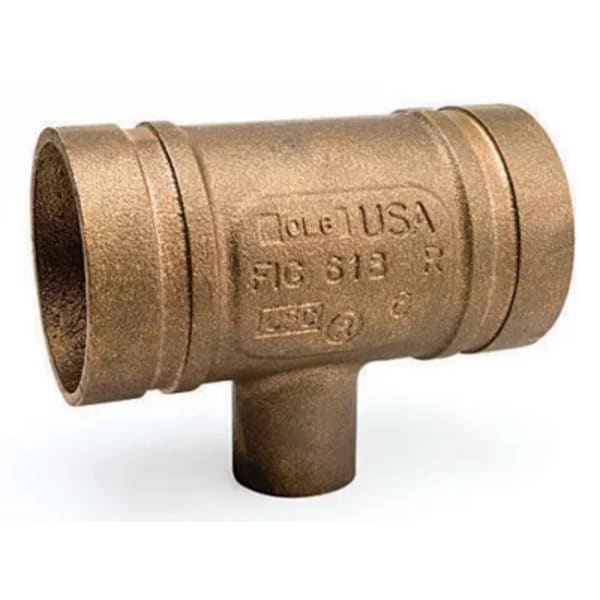
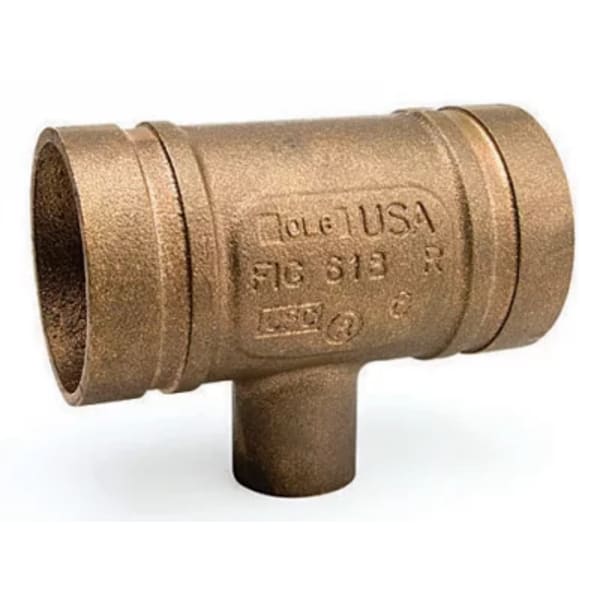
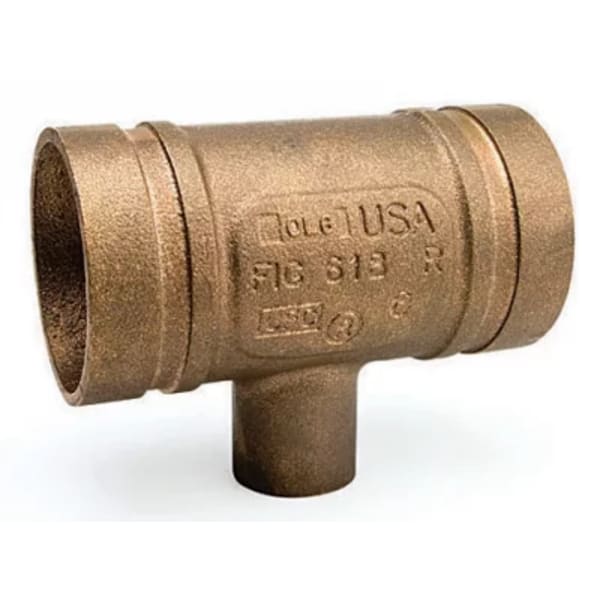
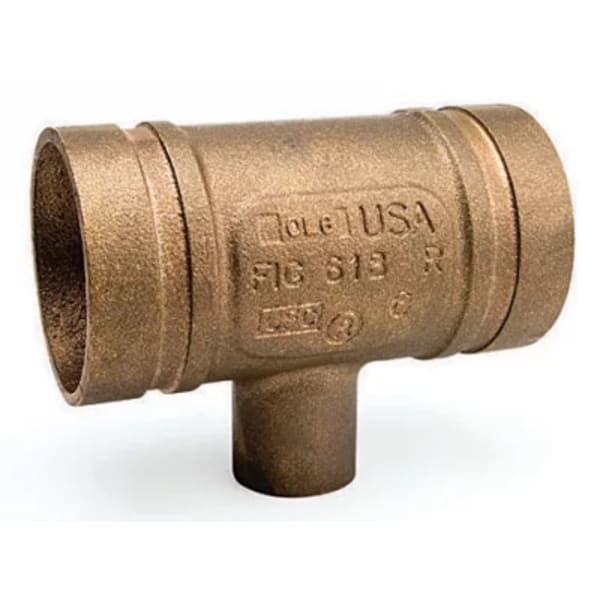
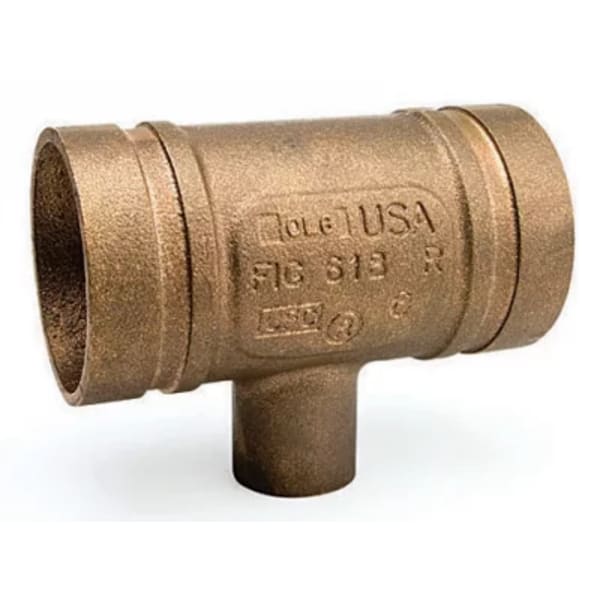
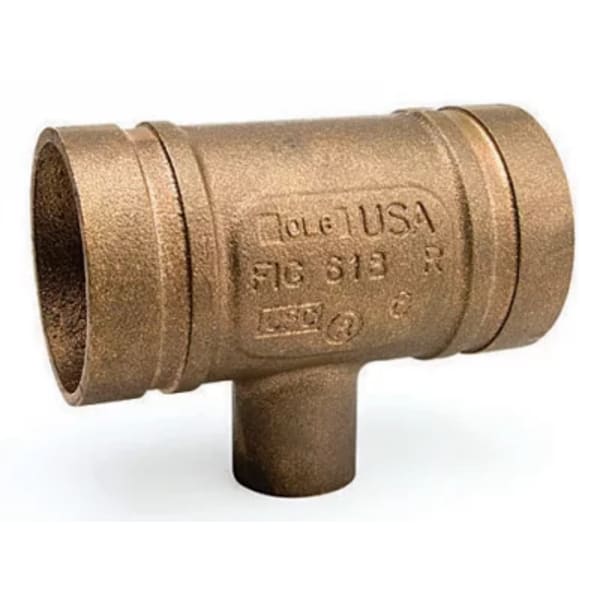
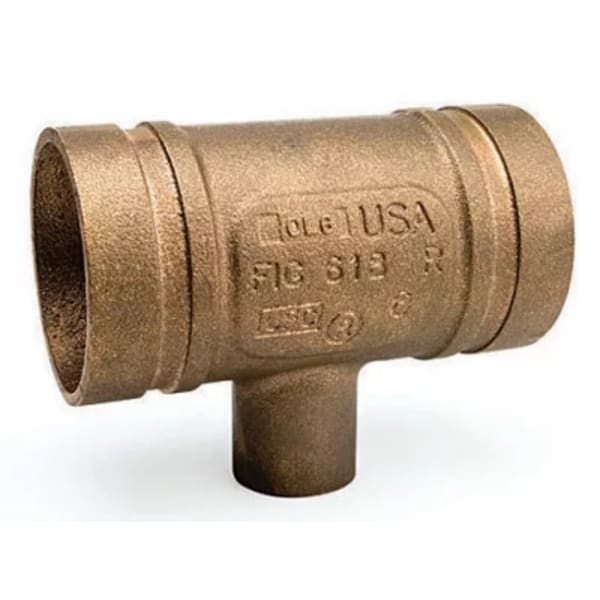
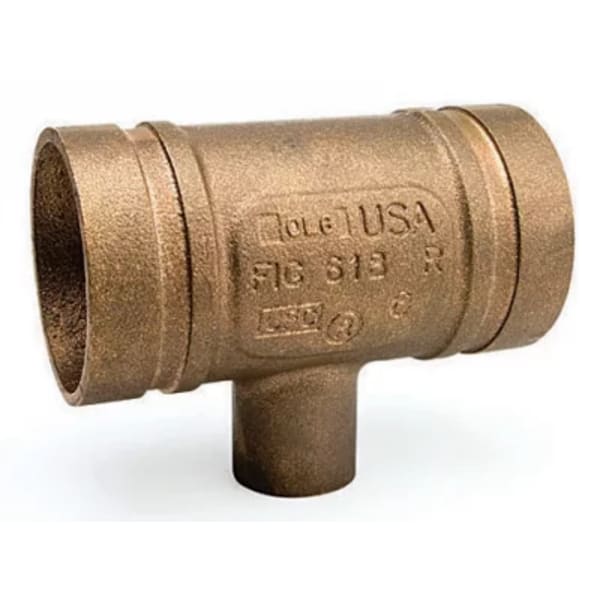
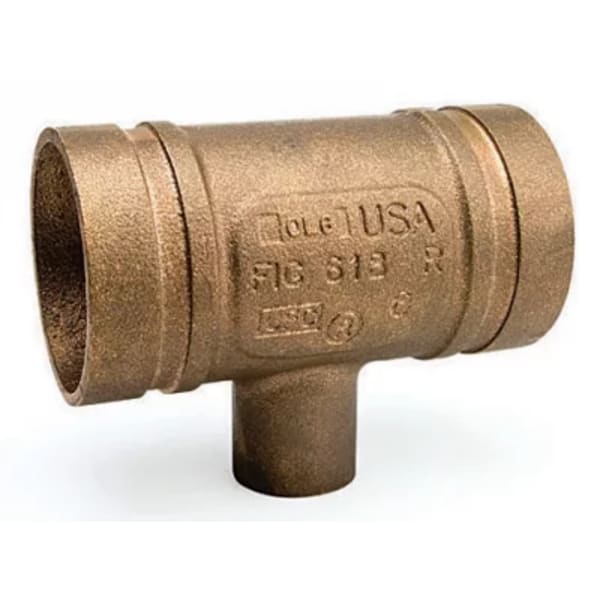
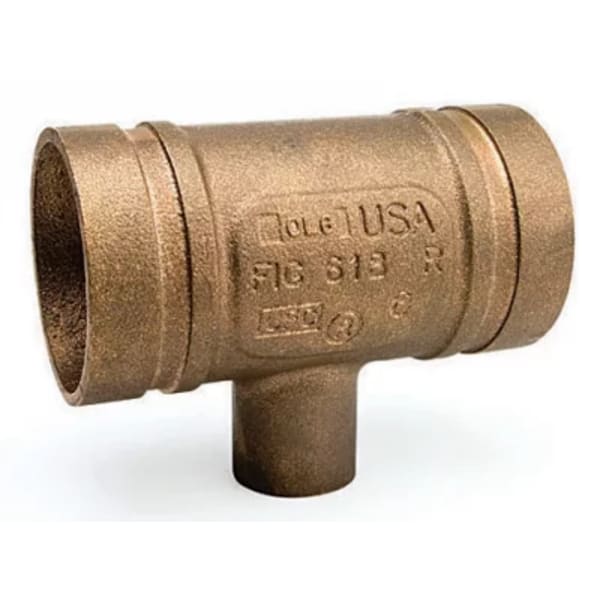
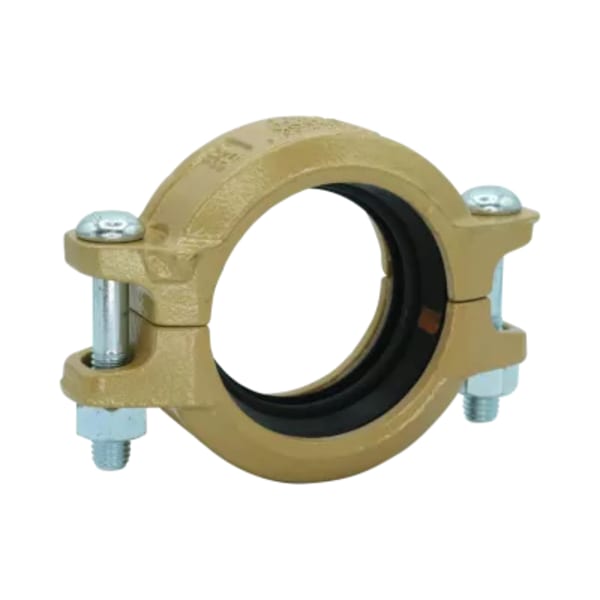
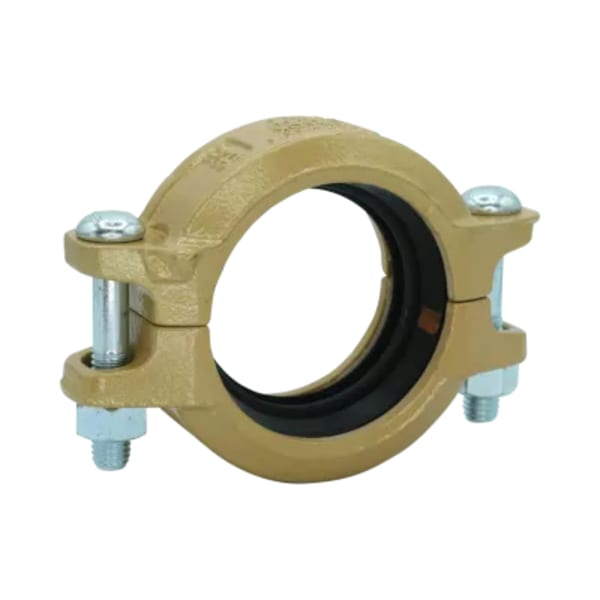
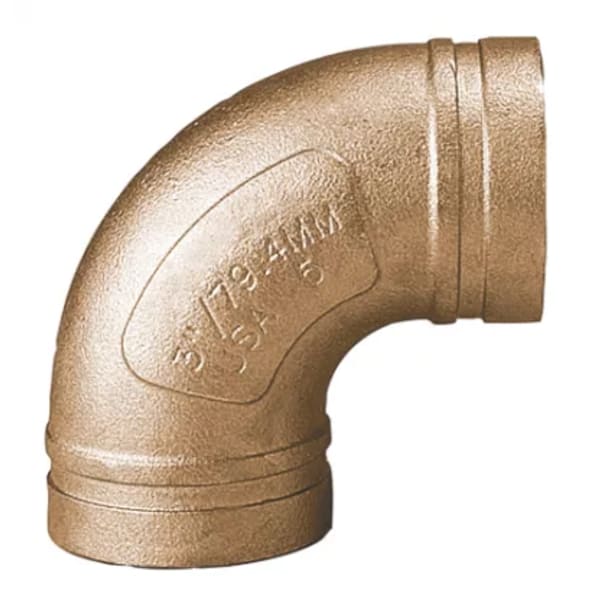
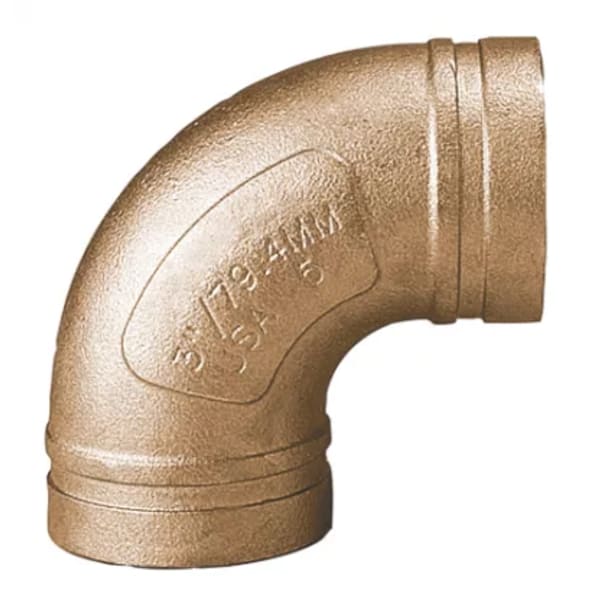
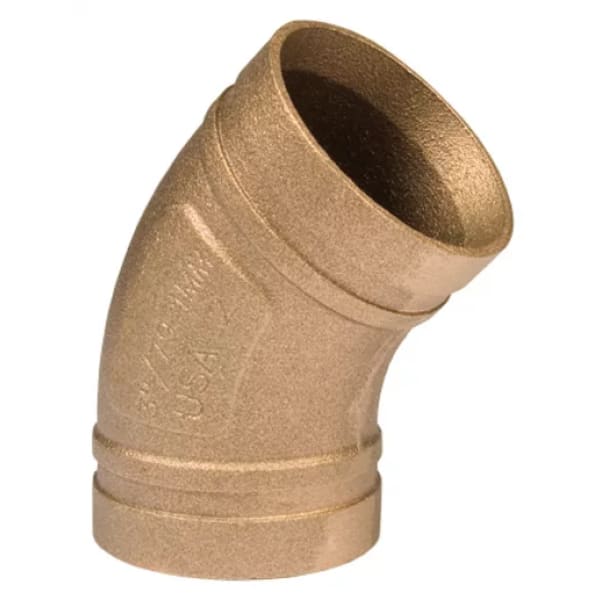
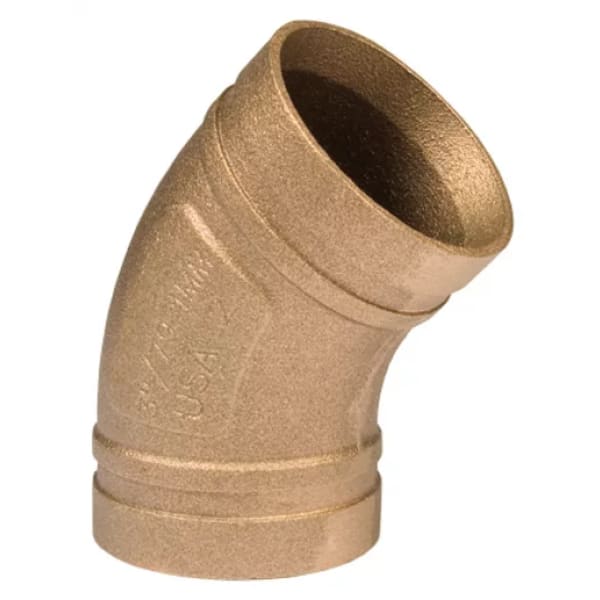
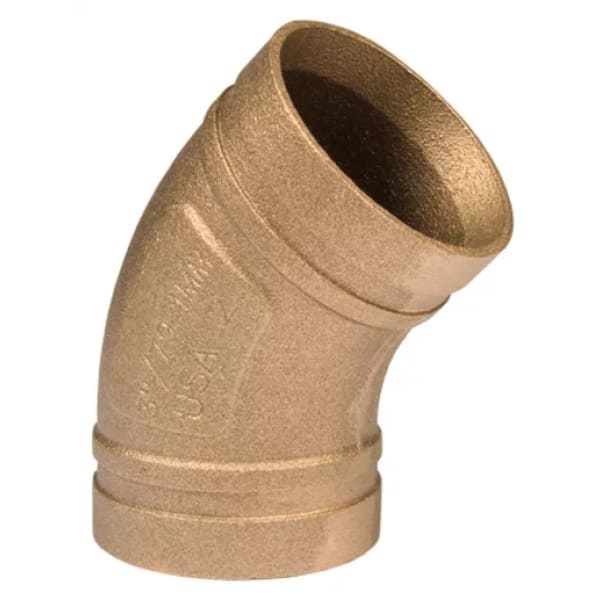
Seventy-two Gruvlok grooved copper fittings in 2" through 6": 28 tees, 19 couplings, 10 elbows, 10 fitting reducers and 5 caps. All Gruvlok, $180 to $8,867. The grooved steel fittings and the wider Gruvlok range are on their own pages.
Why grooved copper exists: no flame
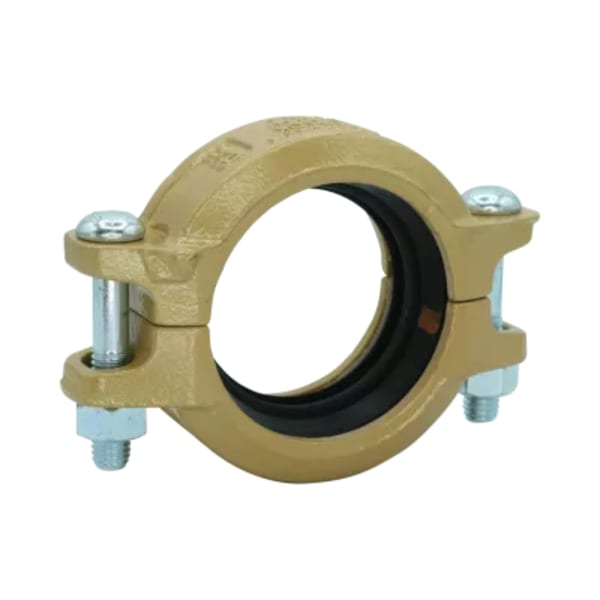
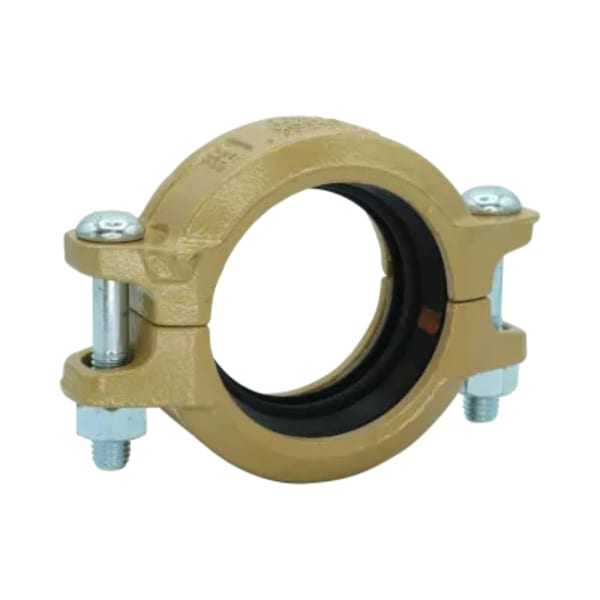
A groove is rolled or cut into the end of the copper tube. The coupling housings close over that groove with a gasket captured between them, and two bolts pull them together. There is no solder, no flux and no torch.
On 2" copper that is a convenience. On 4" and 6" it is the reason the system exists. Brazing large-diameter copper inside an occupied building means a hot-work permit, a fire watch posted before and after, and an open flame near ceiling insulation. A grooved coupling takes minutes with two wrenches and none of that paperwork. It is why grooved copper turns up in hospitals, data centres and any retrofit where the building cannot be shut down.
Reading the connection code
Every listing ends in the end configuration, and it is the fastest way to find what you need:
-
GR x GR - grooved both ends. 22 fittings: elbows and straight couplings.
-
GR x GR x GR - grooved three ways. 22 fittings: tees and reducing tees.
-
GR - a single grooved designation. 18 fittings: caps and couplings that close over two already-grooved pipe ends.
-
GR x SWT - grooved on one end, sweat solder socket on the other. 10 fitting reducers.
That last one is the important one. The GR x SWT fitting reducer is the transition between a grooved main and a soldered branch - it is how a 4" grooved riser feeds a 2" sweat line without regrooving anything. If you are mixing methods on one job, these are the parts that let you.
Most of this range reduces
Forty-six of the 72 carry two sizes. The reducing tees take a branch down as far as 3/4" off a 4" main, which is the common case: a large grooved riser with small soldered takeoffs to fixtures or equipment. The reducing couplings step the main itself - 4" to 3", 6" to 4", and so on. Straight, same-size fittings are the minority here.
SlideLok couplings
Four of the couplings are SlideLok (2", 2-1/2", 4" and 6"). These install without taking the housing apart first - the coupling slides onto the grooved ends and the bolts close it. On a ladder with 6" copper in your other hand, not having to disassemble and reassemble a housing is worth more than it sounds.
Gasket grade is not a detail
The SlideLok couplings here carry EPDM gaskets, identified by the green and red stripe. Eight other couplings carry an EN gasket code in the listing.
Check the gasket grade against your fluid and temperature before ordering, and do not assume one grade substitutes for another. The gasket is the seal - the housings only supply clamping force. A gasket compound wrong for the medium will hold on the pressure test and fail months later, which is the worst possible failure mode in a ceiling.
This is specified material
The 6" tee runs $6,262 and the 6" x 2-1/2" reducing tee $8,867. Grooved copper is not shelf stock anyone buys speculatively - it is ordered off a drawing, by size and configuration, for a specific run. Confirm the size pair and the end configuration against the submittal before ordering, because these do not get returned casually.
Three ways to join copper
Grooved is one of three. Sweat fittings are the traditional soldered socket - cheapest per fitting, slowest, and they need a flame. Press fittings use a jaw to crimp a fitting with an O-ring onto plain tube, flameless like grooved but tooling-dependent; the press tools and jaws are on their own page. Grooved wins on large diameters and on anything that may need to come apart again. For the pipe itself, see Type L hard copper.