
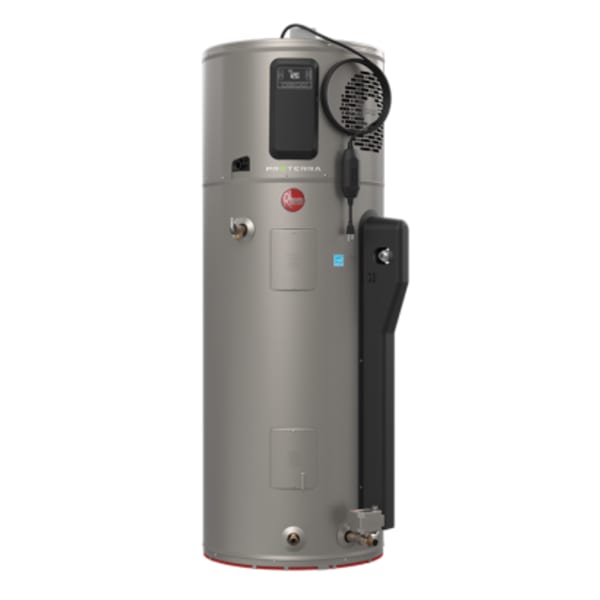
There is no single best heat pump water heater for every home. The right model depends on how much hot water your household uses, what electrical service you have at the water heater, how much space and air the unit will have, and how warm that space stays. This guide skips the ranked "top 10" lists and instead walks through the specs that matter, then shows how the heat pump water heaters we carry line up against them.
Quick checklist
- Capacity: pick a tank size and first-hour rating that cover your peak hour of use.
- Efficiency (UEF): compare Uniform Energy Factor and the estimated yearly cost on the EnergyGuide label.
- Voltage: 240 V hybrid or 120 V plug-in, based on the circuit you have or can add.
- Space and air: confirm the room meets the manual's air volume or ducting requirement and the unit fits, including height.
- Temperature: check the heat pump's operating air-temperature range against the coldest and hottest the space gets.
- Drainage: plan a condensate drain or pump, plus a drain pan where a leak would cause damage.
1. Capacity: tank size and first-hour rating
Heat pump water heaters recover more slowly on the heat pump alone than a standard electric tank does with its elements, so many installers size one step larger than the tank being replaced. As a rough starting point:
| Household | Common heat pump tank size |
|---|---|
| 1 to 2 people | 40 to 50 gallons |
| 2 to 4 people | 50 to 65 gallons |
| 4 or more people, or a large soaking tub | 65 to 80 gallons |
These are general ranges, not a rule. The better number to compare is the first-hour rating on the spec sheet, which shows how many gallons of hot water the unit can supply in one busy hour starting with a full tank. Add up your peak hour (for example, two showers, a dishwasher and a sink) and choose a model whose first-hour rating covers it.
2. Efficiency: what UEF tells you
UEF (Uniform Energy Factor) is the federal efficiency rating for water heaters. A standard electric resistance tank rates a little under 1.0. Heat pump models commonly rate above 3, because the compressor moves heat from the air instead of creating it. The U.S. Department of Energy says heat pump water heaters can be two to three times more energy efficient than conventional electric resistance water heaters.
Within the heat pump category, the difference between two models' UEF ratings matters less than choosing the right size and installing the unit where it can run on the heat pump most of the time. Use the yellow EnergyGuide label to compare estimated yearly operating cost, and check whether your utility's rebate requires a specific certification such as ENERGY STAR.
3. Voltage: 240 V hybrid or 120 V plug-in
240 V hybrid models
Most heat pump water heaters are 240 V hybrids. They have backup resistance elements that switch on in high-demand modes, which helps recovery. The Rheem ProTerra 50 Gallon Hybrid (PROPH50-T2-RH400-30) and the other 40 to 80 gallon ProTerra hybrids we carry use 4,500 W elements and are listed for a 30 A circuit. If you are replacing an existing electric tank, you may already have a suitable circuit, but have an electrician confirm the breaker and wire size.
120 V plug-in models
Plug-in models run from a standard 120 V outlet, which makes them a practical option when you are switching from gas to electric and there is no 240 V circuit near the water heater. The Rheem ProTerra 40 Gallon 120 V Plug-In (PROPH40-T0-RH120) and 50 gallon version fall in this group. Plug-in units have less power available for fast recovery than a 240 V hybrid, so compare first-hour ratings carefully and check the manual for the outlet and circuit requirements.
4. Space, air volume and height
A heat pump needs air to pull heat from. Each manufacturer lists a minimum room volume in the installation manual, and many allow alternatives such as a louvered door or ducting when the room is smaller. Also check:
- Height and clearance: the heat pump sits on top of the tank, so these units are often taller than a standard tank. Leave room to service the air filter.
- Noise: the fan and compressor make a sound similar to a dehumidifier. Avoid placing it right next to a bedroom.
- Cool exhaust air: the unit cools and dries the space. That is helpful in a hot garage, less so in a small heated room.
- Weight and access: larger tanks are heavy. Check the path into the basement or utility room.
5. Temperature range and climate
Heat pumps work most efficiently in warm air. Every model has an operating air-temperature range; outside it, the unit switches to its electric elements and efficiency drops toward that of a standard electric tank. Garages and unheated basements in cold climates can fall below the range in winter, so check the manual and consider where the unit will spend most of the year. Never install a water heater where it can freeze.
6. Drainage and leak protection
The heat pump produces condensate, so every installation needs a floor drain, a gravity drain line or a condensate pump, in addition to the relief valve discharge. A water heater drain pan is a good idea anywhere a leak would cause damage. Some ProTerra models include built-in LeakGuard leak detection with an automatic shutoff valve, such as the ProTerra 65 Gallon with LeakGuard (PROPH65-T2-RH400-SO).
Heat pump water heaters we carry, by spec
| Model | Capacity | Electrical | Notes |
|---|---|---|---|
| Rheem ProTerra PROPH40-T0-RH120 | 40 gal | 120 V plug-in | For homes without a 240 V circuit |
| Rheem ProTerra PROPH50-T0-RH120 | 50 gal | 120 V plug-in | For homes without a 240 V circuit |
| Rheem ProTerra PROPH40-T2-RH400-30 | 40 gal | 240 V, 30 A | 4,500 W backup elements |
| Rheem ProTerra PROPH50-T2-RH400-30 | 50 gal | 240 V, 30 A | 4,500 W backup elements; LeakGuard version available |
| Rheem ProTerra PROPH65-T2-RH400-30 | 65 gal | 240 V, 30 A | 4,500 W backup elements; LeakGuard version available |
| Rheem ProTerra PROPH80-T2-RH400-30 | 80 gal | 240 V, 30 A | 4,500 W backup elements; LeakGuard version available |
| Sanco Gen5 GS5-45HPC-D | Outdoor unit | See manufacturer specs | Split system: outdoor heat pump paired with a separate storage tank |
Browse the full heat pump water heater collection for current listings, and confirm the specs on the manufacturer's spec sheet before you order.
Is a heat pump the right choice at all?
If you have gas and want endless hot water, a tankless unit may suit you better. See Heat Pump Water Heater vs Tankless: Which Is Right for Your Home? for a side-by-side comparison.
FAQ
What size heat pump water heater do I need?
Start with your household size, then confirm with the first-hour rating against your peak hour of hot water use. Many installers go one size up from the tank being replaced.
Can I install a heat pump water heater myself?
Water, drain and electrical connections must meet local code, and many areas require a permit. Hire a licensed plumber and electrician if you are not qualified, and follow the installation manual.
Do heat pump water heaters work in cold climates?
Yes, but efficiency depends on the air around the unit. In a space that drops below the heat pump's operating range, the unit relies on its electric elements more often.
What does LeakGuard do?
On the Rheem models that include it, LeakGuard detects a leak and closes a shutoff valve on the water supply. Check the product details for which models include it.