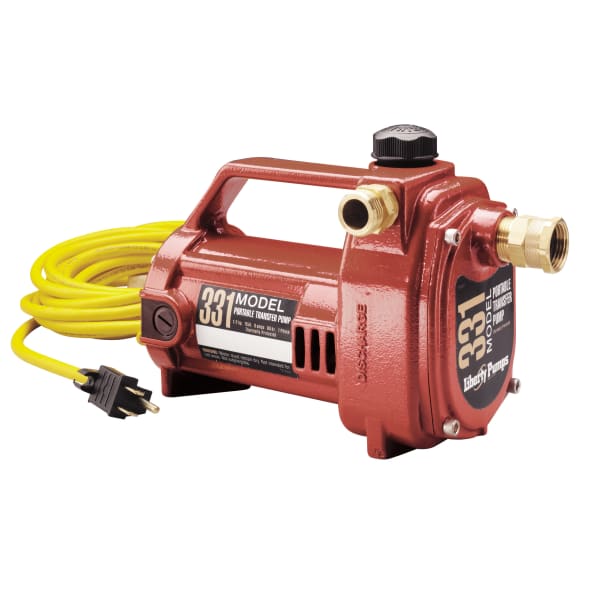
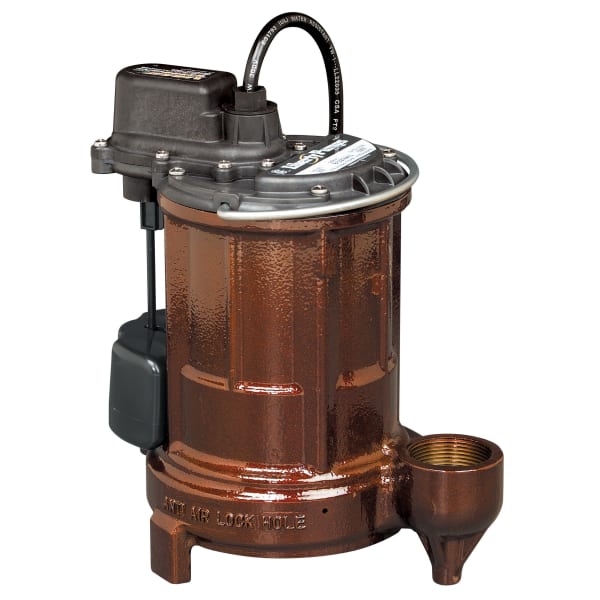
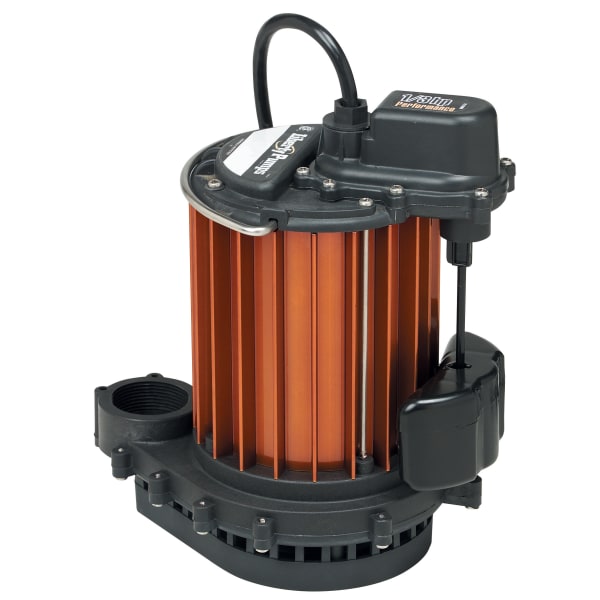
Sump pumps for basement and crawlspace water removal: primary submersible units, battery back-up pumps and portable utility pumps.
A sump pump moves clear water only. It has no solids-handling capability, so it belongs in a groundwater sump and never on a sewage or effluent line — a toilet or laundry discharge needs a pump rated to pass 2" solids. Discharge is typically 1-1/2" FIP.
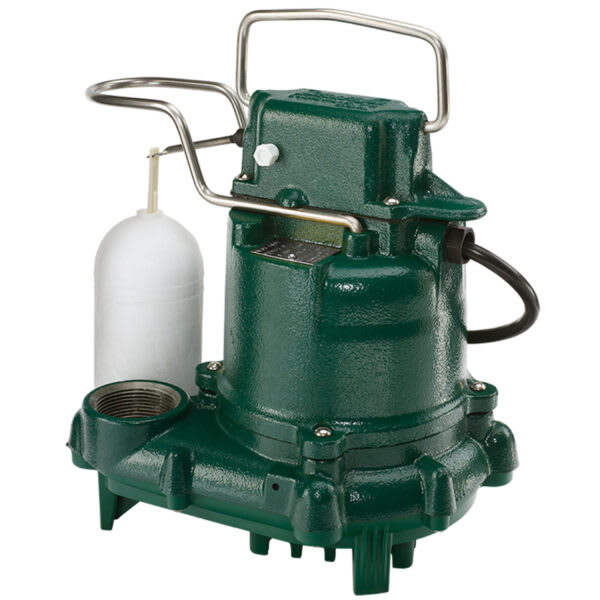
The switch decides how long the pump lasts. Vertical magnetic float switches suit narrow basins where a tethered float cannot swing freely; tethered wide-angle floats give a longer draw-down and therefore fewer starts, which is what actually wears a motor out. A manual pump has no switch at all and is for controlled use, not unattended protection.
Back-up pumps matter because the failure case is a power outage during a storm, which is exactly when the primary is needed. A DC back-up on its own battery runs independently of the house supply.
Always fit a check valve on the discharge. Without one, the water standing in the pipe drains back into the pit and the pump restarts immediately.
Brands include Liberty Pumps and Zoeller.
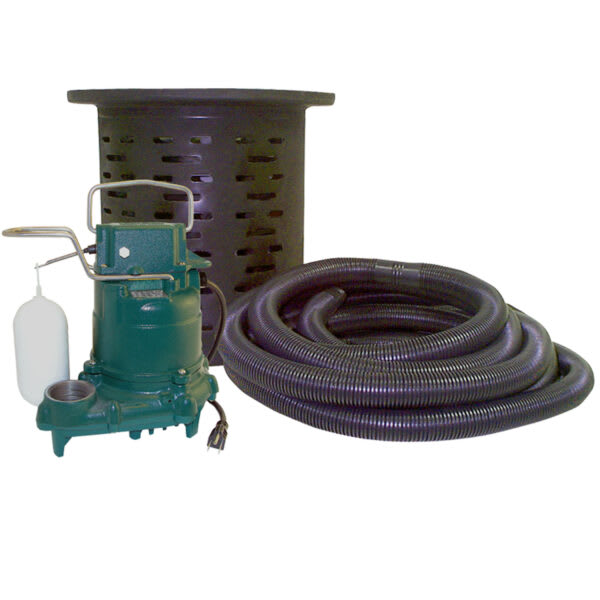
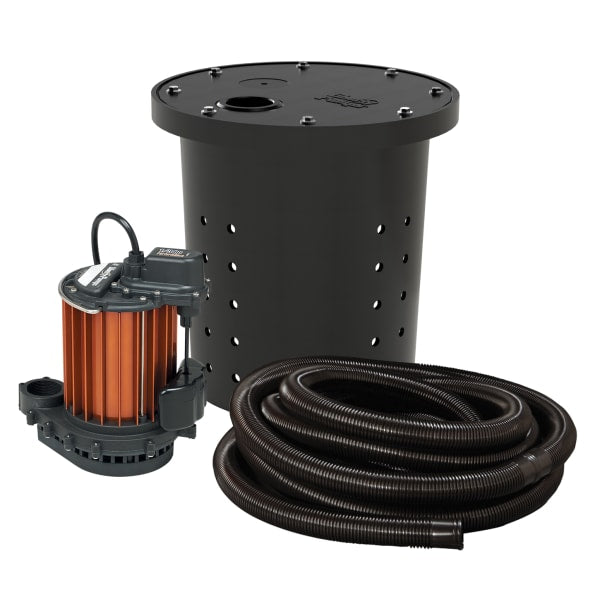
Popular in this collection: Zoeller Model 98 Sump Pump, 1/2 HP, Zoeller Model 53 Sump Pump, 3/10 HP, Liberty Pumps Battery Back-Up Sump Pump, Liberty Pumps CSP-237 Crawl Space Sump Pump.
How to size a sump pump: HP, GPH and head height
Horsepower alone does not tell you whether a pump will keep up. What matters is how many gallons per hour (GPH) it moves at your total head.
-
Vertical lift. Measure from the bottom of the pit to the highest point of the discharge pipe, usually where it leaves the house.
-
Total head. Add friction for the run: a common rule of thumb is 1 ft of head for every 10 ft of horizontal pipe, plus a little for each elbow and the check valve.
-
Inflow. In a heavy rain, time how many inches the water rises in one minute. An 18 in. basin holds about 1.1 gallons per inch and a 24 in. basin about 2 gallons per inch. Multiply by 60 for gallons per hour.
Choose a pump whose performance curve, shown on the spec sheet, delivers more than your inflow at your total head. A 1/3 HP pump suits most basements with a lift of about 10 ft or less. Step up to 1/2 HP for higher lifts, long discharge runs or fast inflow.
Frequently asked questions
What size sump pump do I need?
A 1/3 HP pump handles most residential basements. Choose 1/2 HP or more when water comes in fast or has to be lifted higher to the discharge point. Compare the pump curve, gallons per hour at your vertical lift, with how quickly the pit fills.
Do I need a battery backup sump pump?
Storms that raise the water table often knock out power at the same time. A battery backup pump sits in the same pit, above the primary pump, and runs if the primary loses power or fails.
Does a sump pump need a check valve?
Yes. A check valve on the discharge line keeps the water in the pipe from running back into the pit when the pump shuts off, so the pump does not have to move the same water again.
What is head height on a sump pump?
Head is the height the pump has to lift water, plus friction from the pipe and fittings. Flow drops as head rises, so a pump rated for a high GPH at 0 ft may deliver much less at 10 ft. Check the GPH at your total head, not the maximum.
How many GPH does my sump pump need?
Measure how fast the pit fills during heavy rain and convert it to gallons per hour using the basin size. Pick a pump that moves more than that at your total head, with some margin for the worst storms.
Is a 1/3 HP or 1/2 HP sump pump better?
Neither is better in general. A 1/3 HP pump is enough for most homes with average water and a lift up to about 10 ft. A 1/2 HP pump moves more water at higher head, which helps with high water tables, deeper basements or long discharge lines.