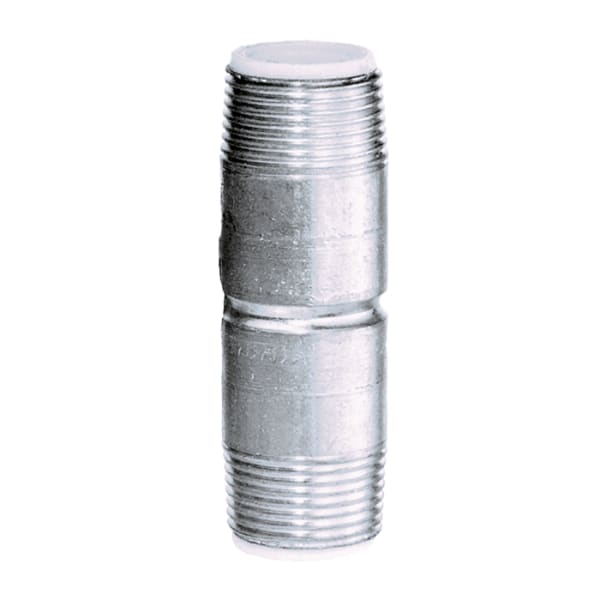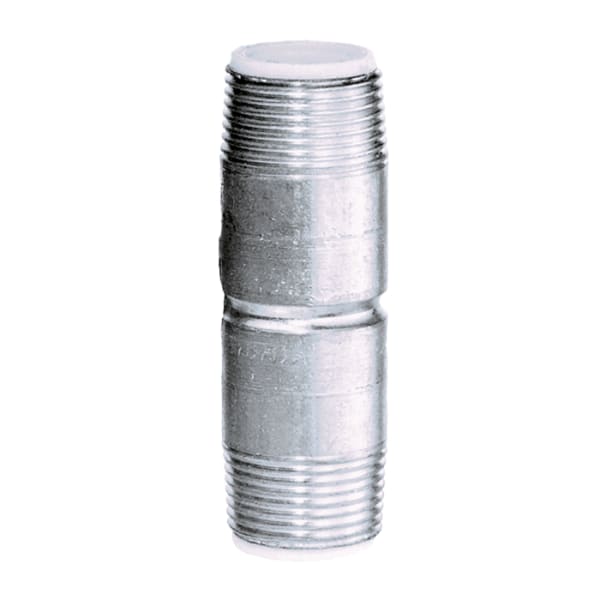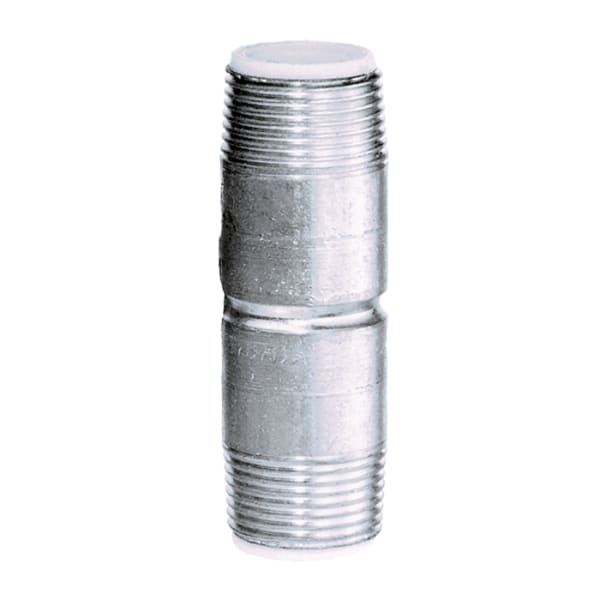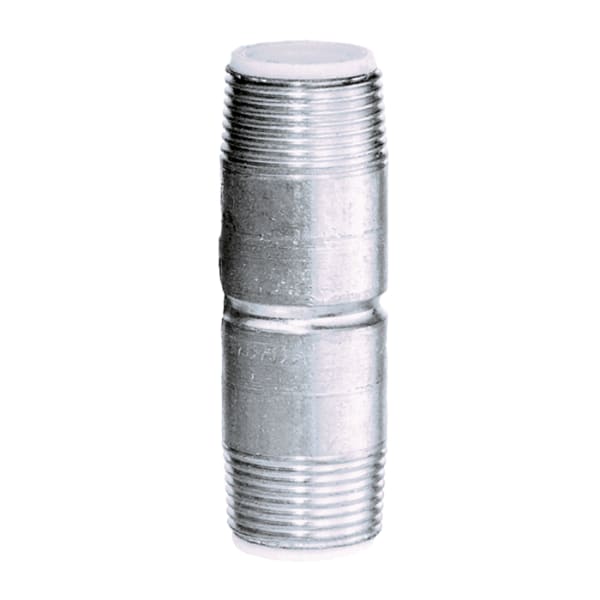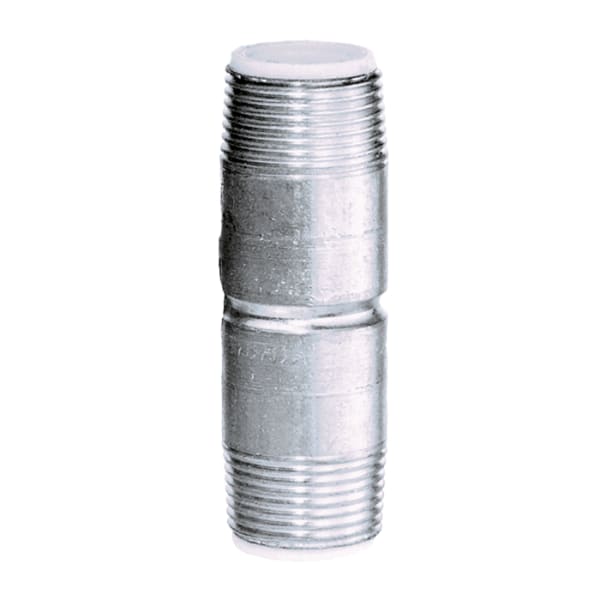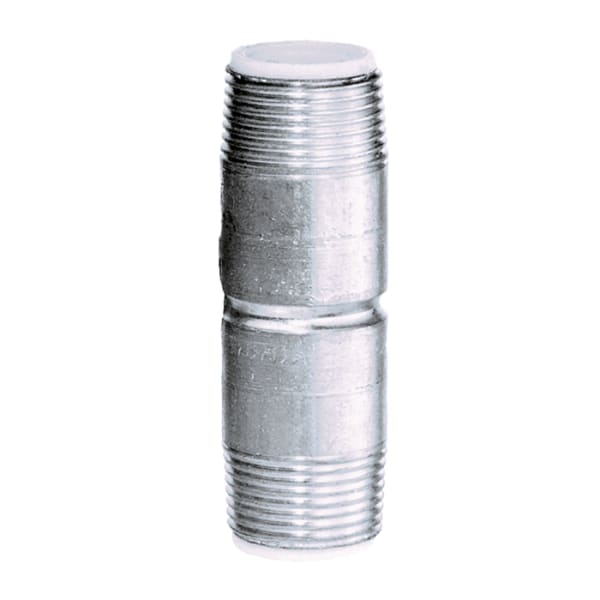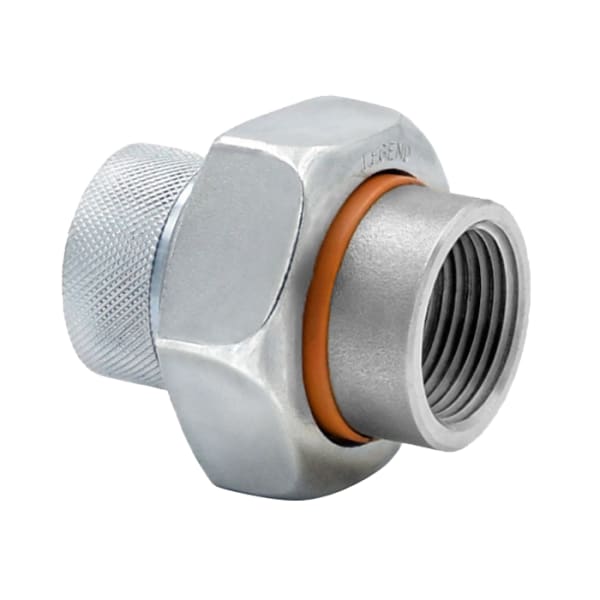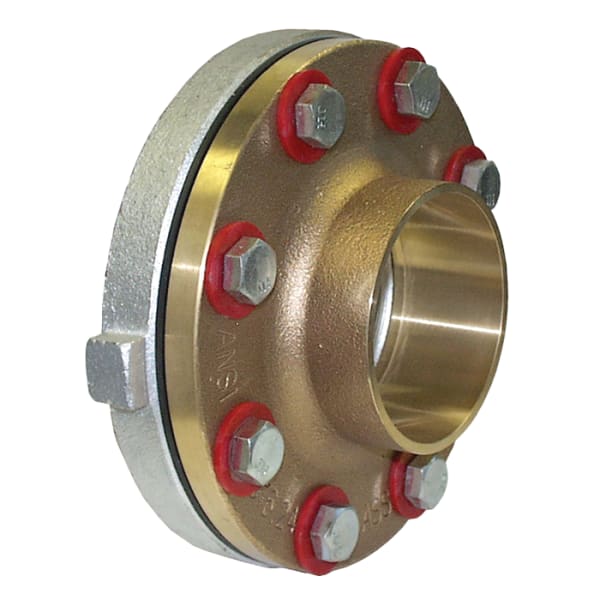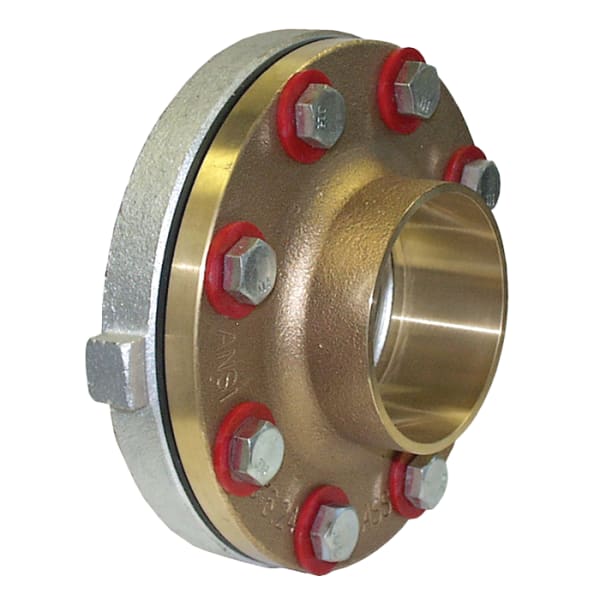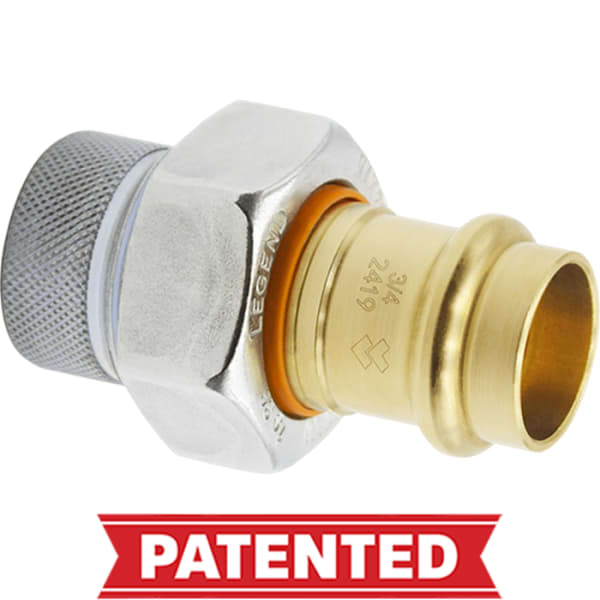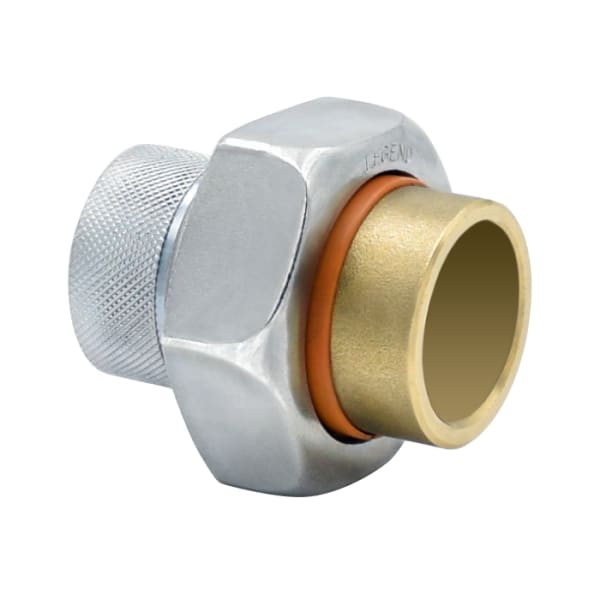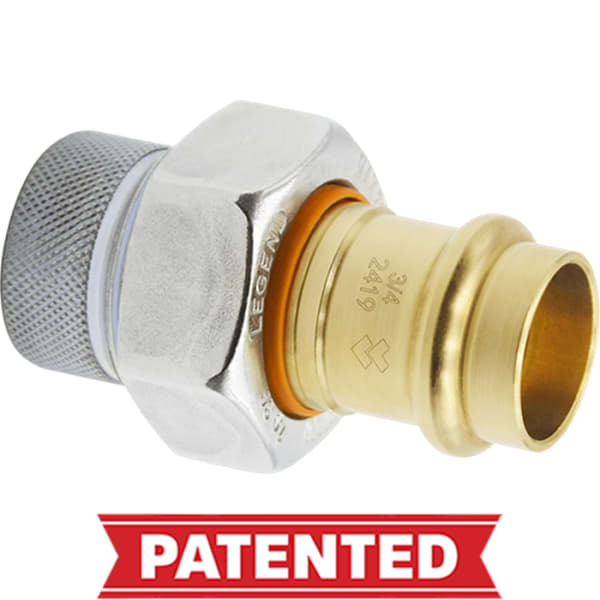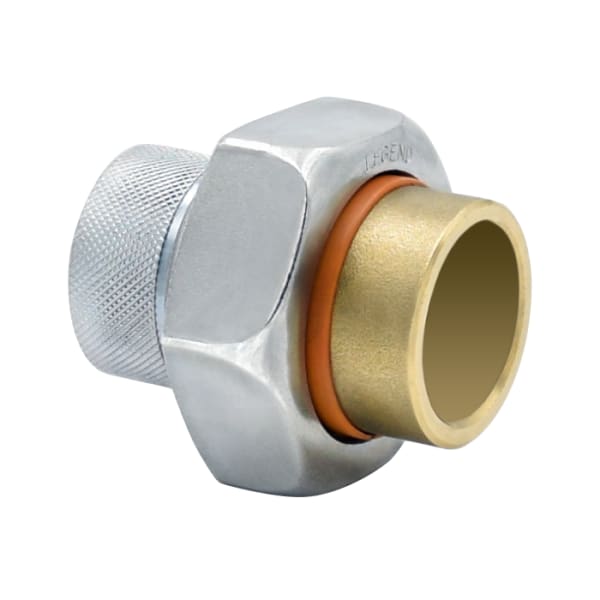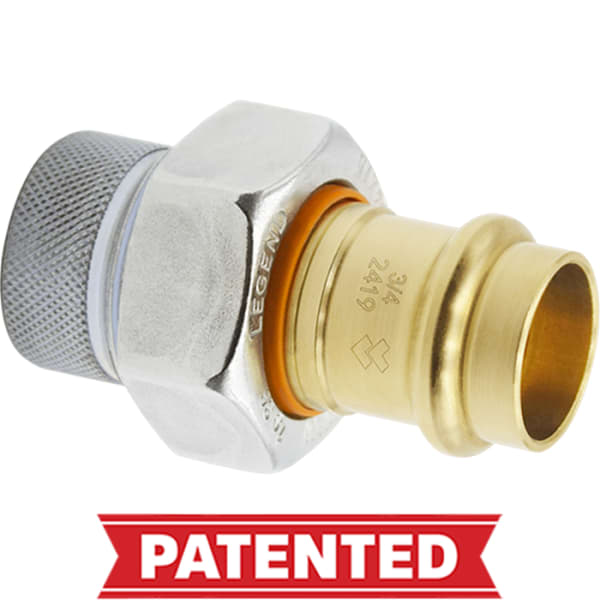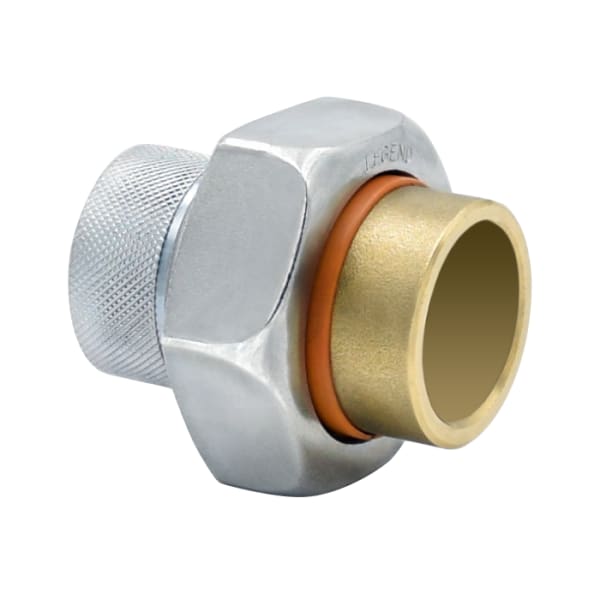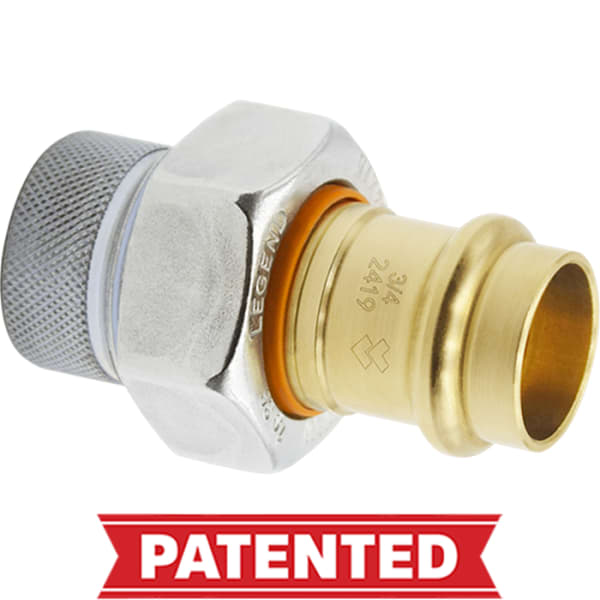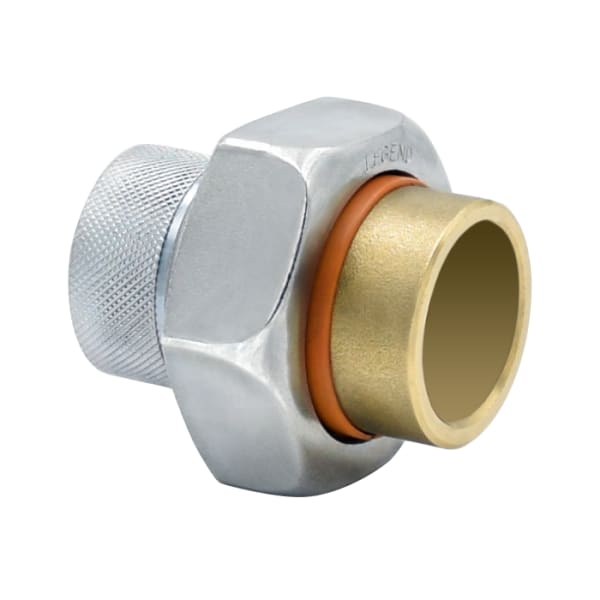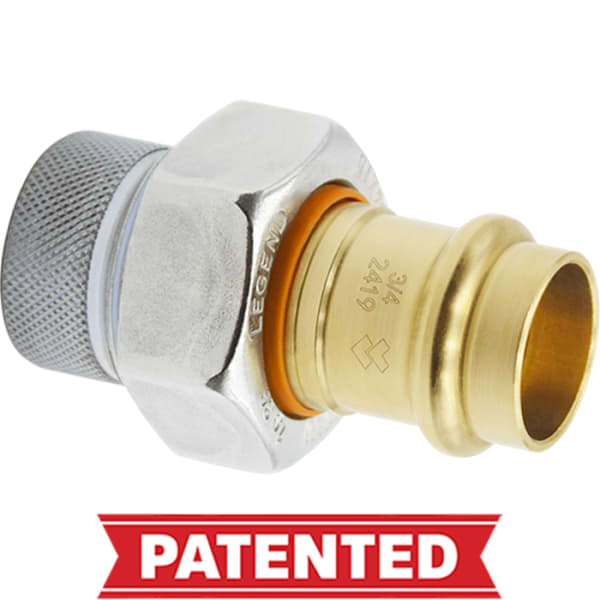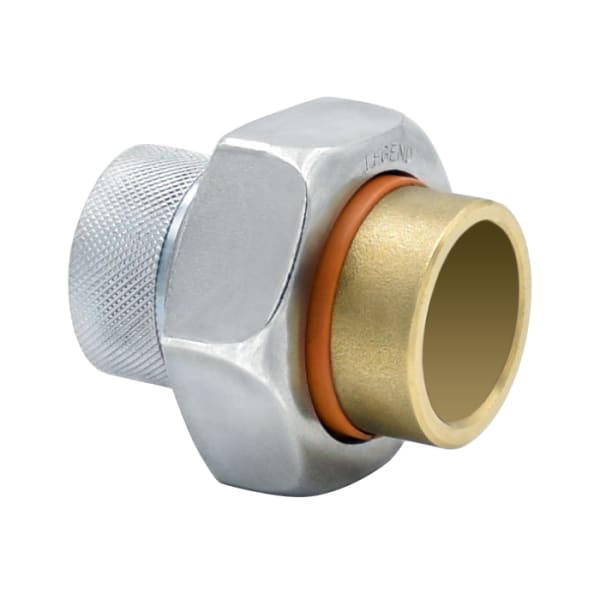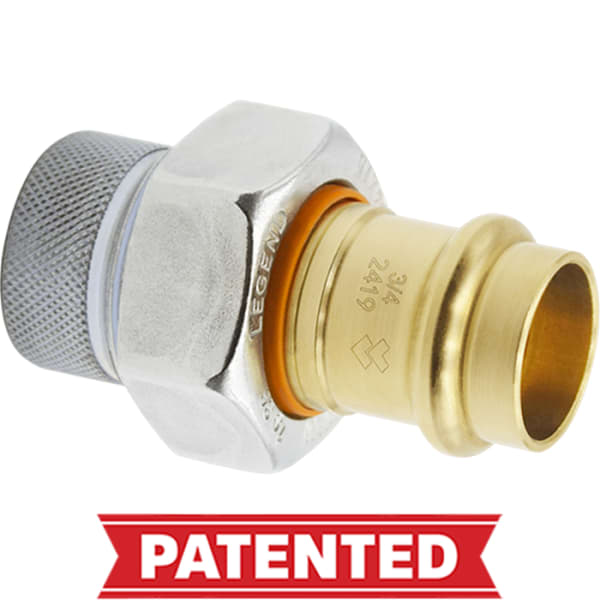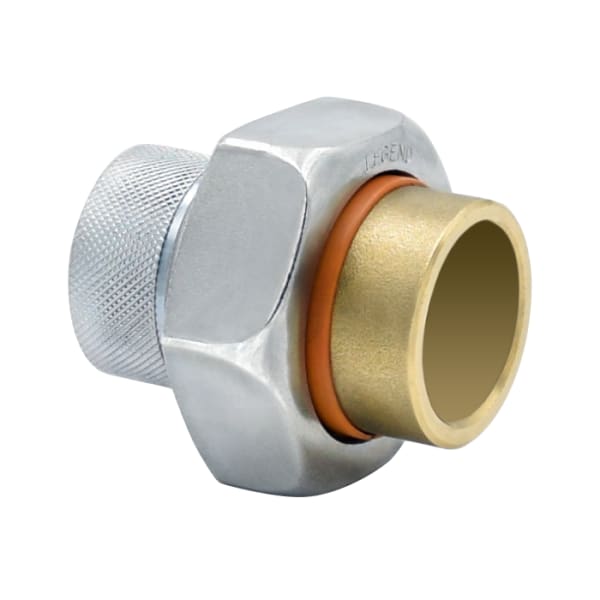
Dielectric unions and nipples in 1/2" through 2", in FIP x sweat, MIP x MIP, press and flanged union configurations.
Where copper meets steel with water between them, the two metals form a galvanic cell and the steel side corrodes. It is not slow: a direct copper-to-steel connection on a water heater can perforate in a few years, and the leak appears at the fitting rather than in the pipe.
A dielectric fitting breaks the electrical path with a plastic or rubber insulator between the two halves. Water heater connections are the classic application, which is why the tank manufacturers specify them.
Two practical notes. The insulator is the whole point, so a dielectric union assembled with the gasket omitted or a metallic ground strap bridged across it does nothing. And dielectric unions are known to scale internally over time — the restriction shows up as reduced flow, and it is a maintenance item, not a permanent fitting.
Dielectric nipples do the same job in a single piece with a lined bore.
Stocked from Legend Valve.