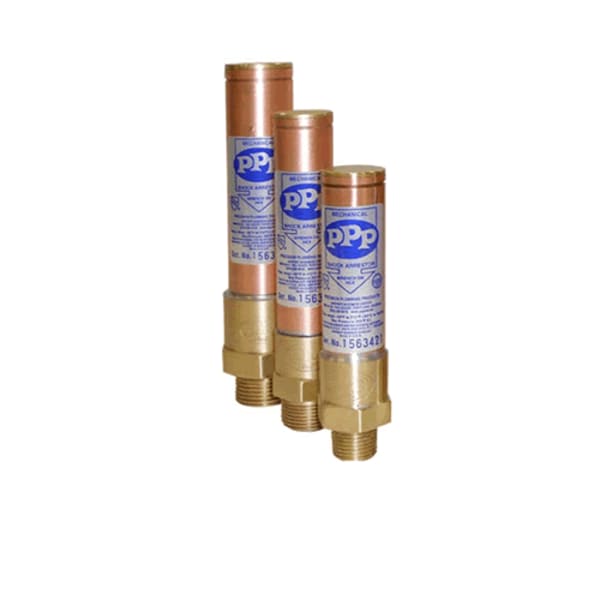
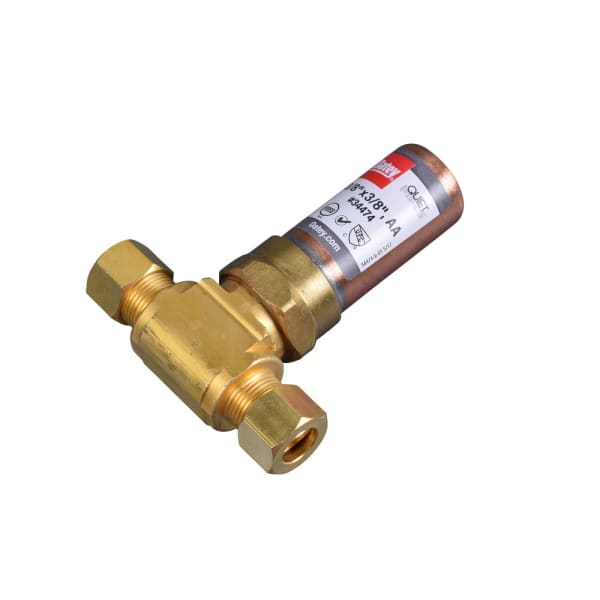
22 water hammer arrestors from Sioux Chief (17), Precision Plumbing Products (2), Oatey (2) and Watts (1), 1/4" through 1", in female and O.D. compression, MIP, male sweat, hose tee and stub-out connections.
Water hammer is a pressure spike, not a loose pipe. A quarter-turn stop, or the solenoid in a washer or dishwasher, stops a moving column of water in milliseconds. That energy does not disappear — it goes into the piping as a shock wave that runs the branch and comes back. Strapping the pipe tighter quiets the rattle and leaves the shock exactly where it was; the arrestor is the part that absorbs it, with a sealed gas charge behind a piston that takes the spike and re-seats for the next one.
An air chamber is not an arrestor. The capped vertical stub of pipe that used to get roughed in above each fixture works right up until the trapped air dissolves into the water — weeks to months, not years. After that it is a dead leg full of water doing nothing at all. A sealed arrestor keeps its charge because the gas never touches the water, which is why the codes moved to them, and why replacing a failed air chamber with another length of capped pipe only resets the clock.
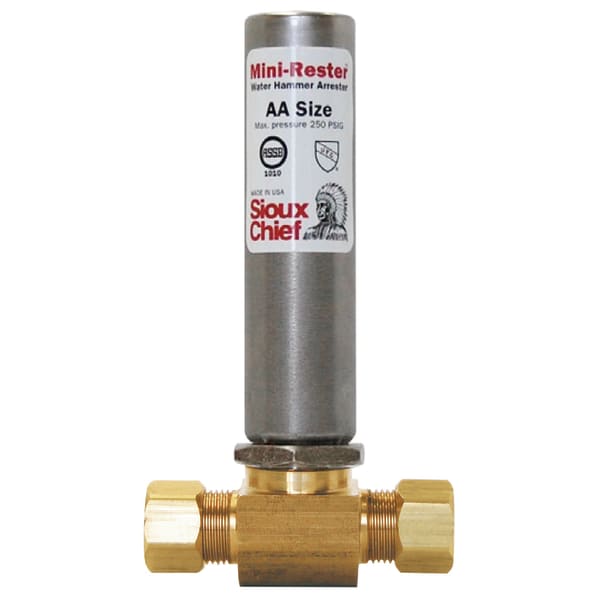
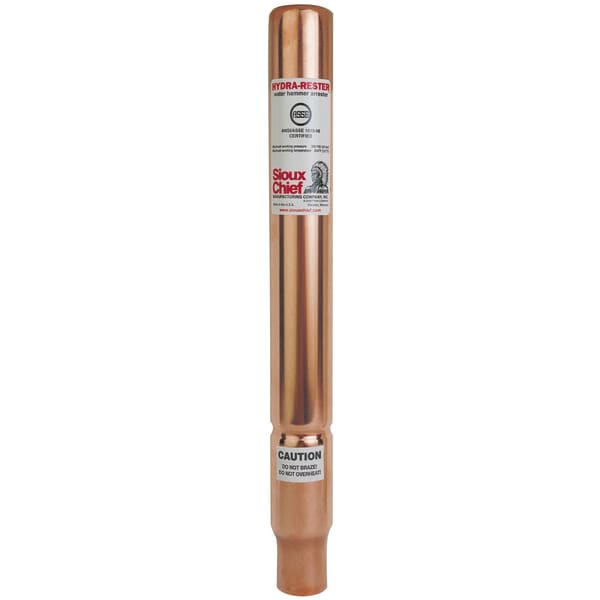
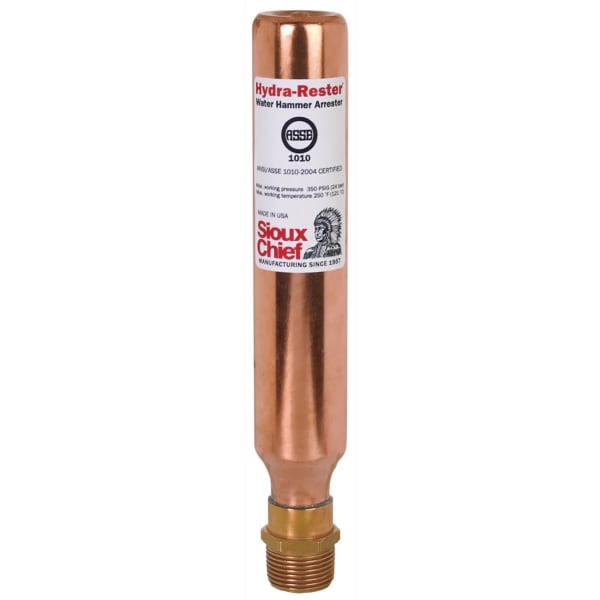
Sizing is by fixture units, and the letter stamped on the unit is the class. ASSE 1010 defines the classes; the Sioux Chief Hydra-Rester line here is stocked in A, B, C, D and E, and the Mini-Rester and Oatey Quiet Pipes cover the AA class for a single fixture. Count the fixture units on the branch being protected and take the class off the manufacturer’s chart. Going one class larger costs a few dollars; going one class smaller leaves the bang in the wall.
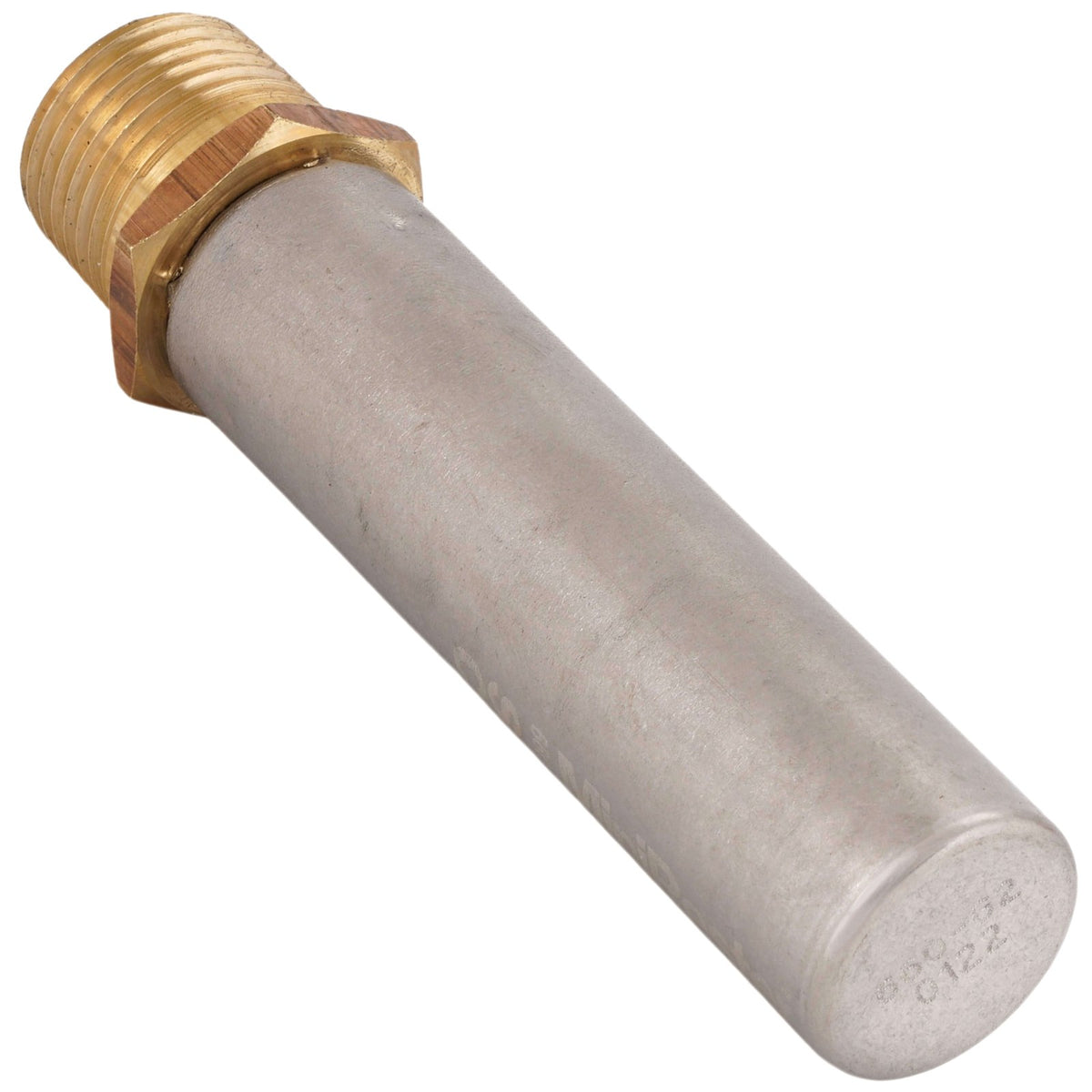
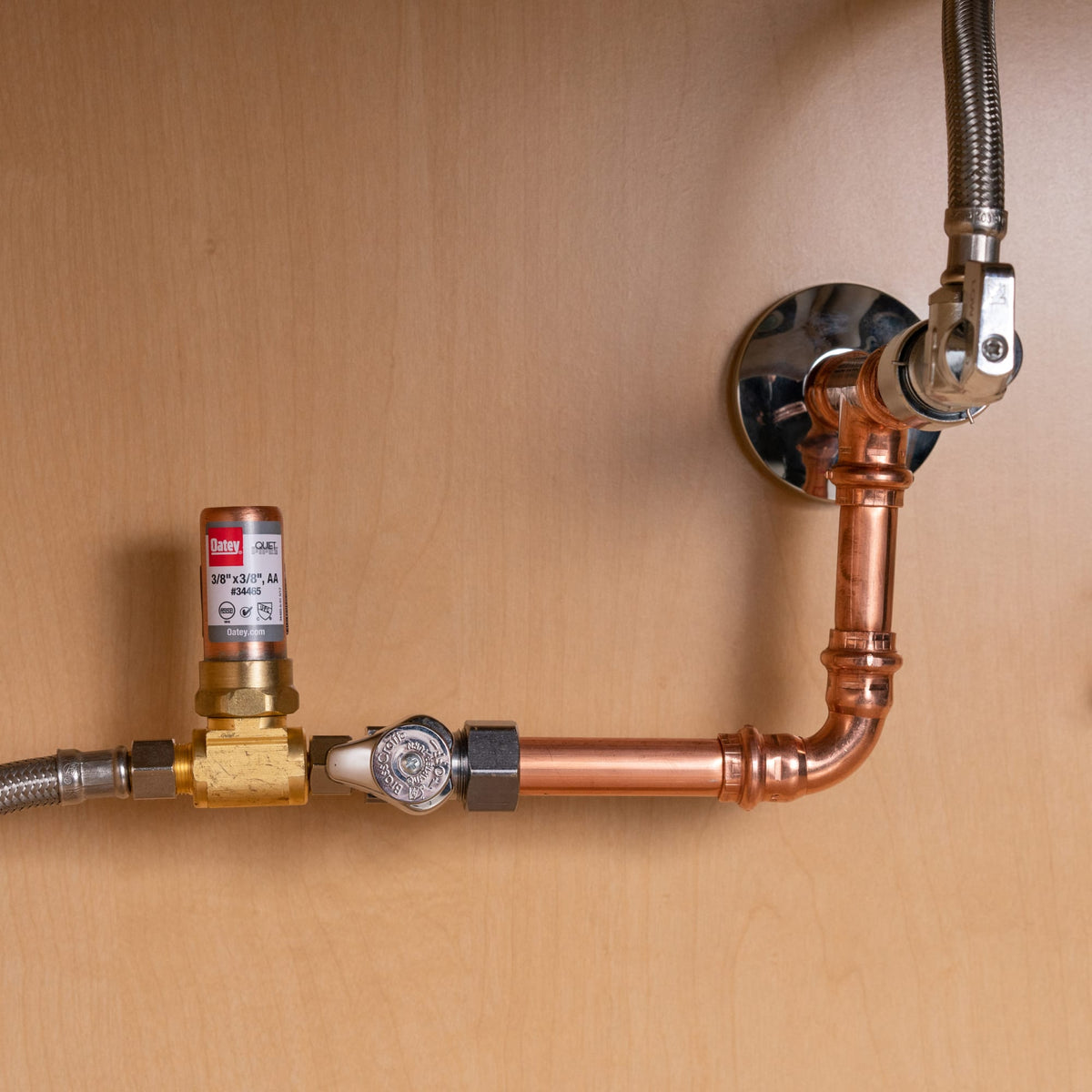
Placement matters as much as the class. The arrestor goes as close to the valve causing the shock as the rough-in allows — on the branch, ahead of the fixture, not out at the end of the main where it will do very little. On a washer, the box-mounted arrestors handle it at the point of use. Where the wall is already closed, the stub-out Mini-Resters go in place of the existing stub and the hose tee model threads on at the connection without opening anything up.
Connections here cover the common cases: 1/4" and 3/8" compression for an ice maker, a dishwasher or a lavatory supply; 1/2" MIP and male sweat for a branch; 3/4" and 1" for a main or a large-fixture group.
Related: washing machine outlet boxes with arrestors built in, supply and outlet boxes, stops and supplies, PEX fittings and laundry and utility.