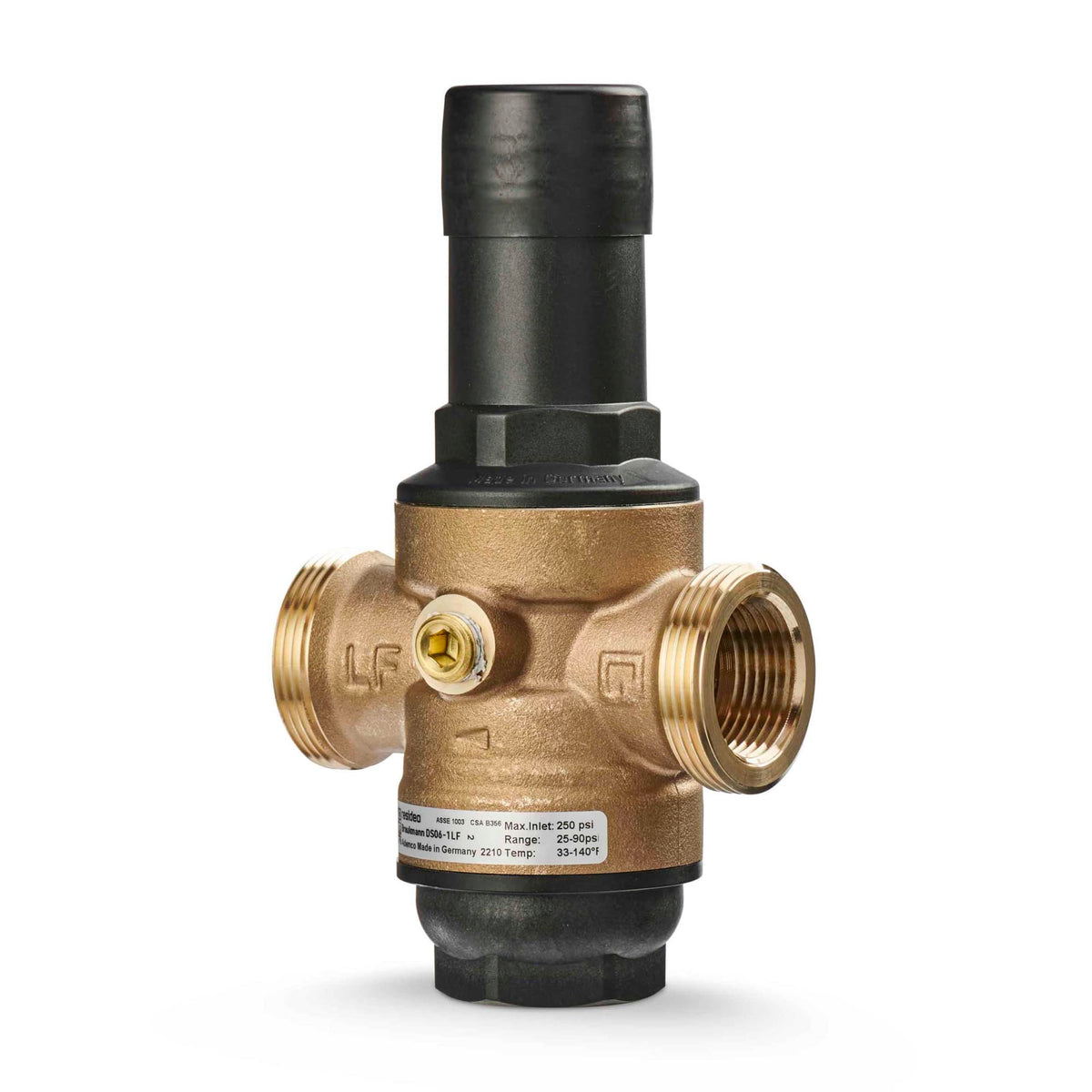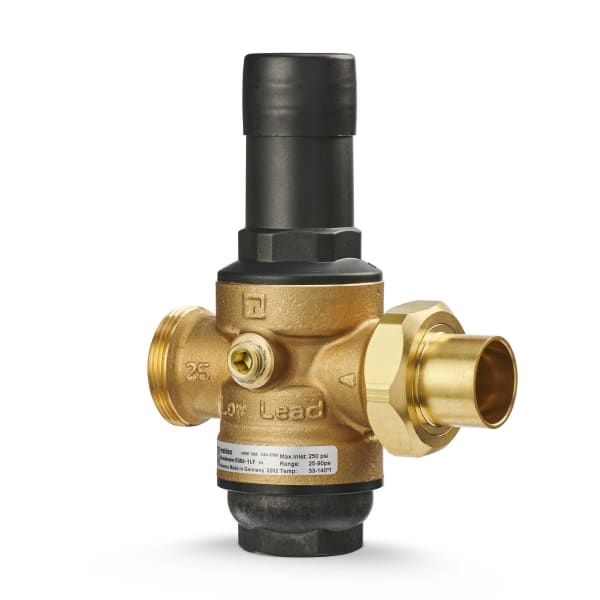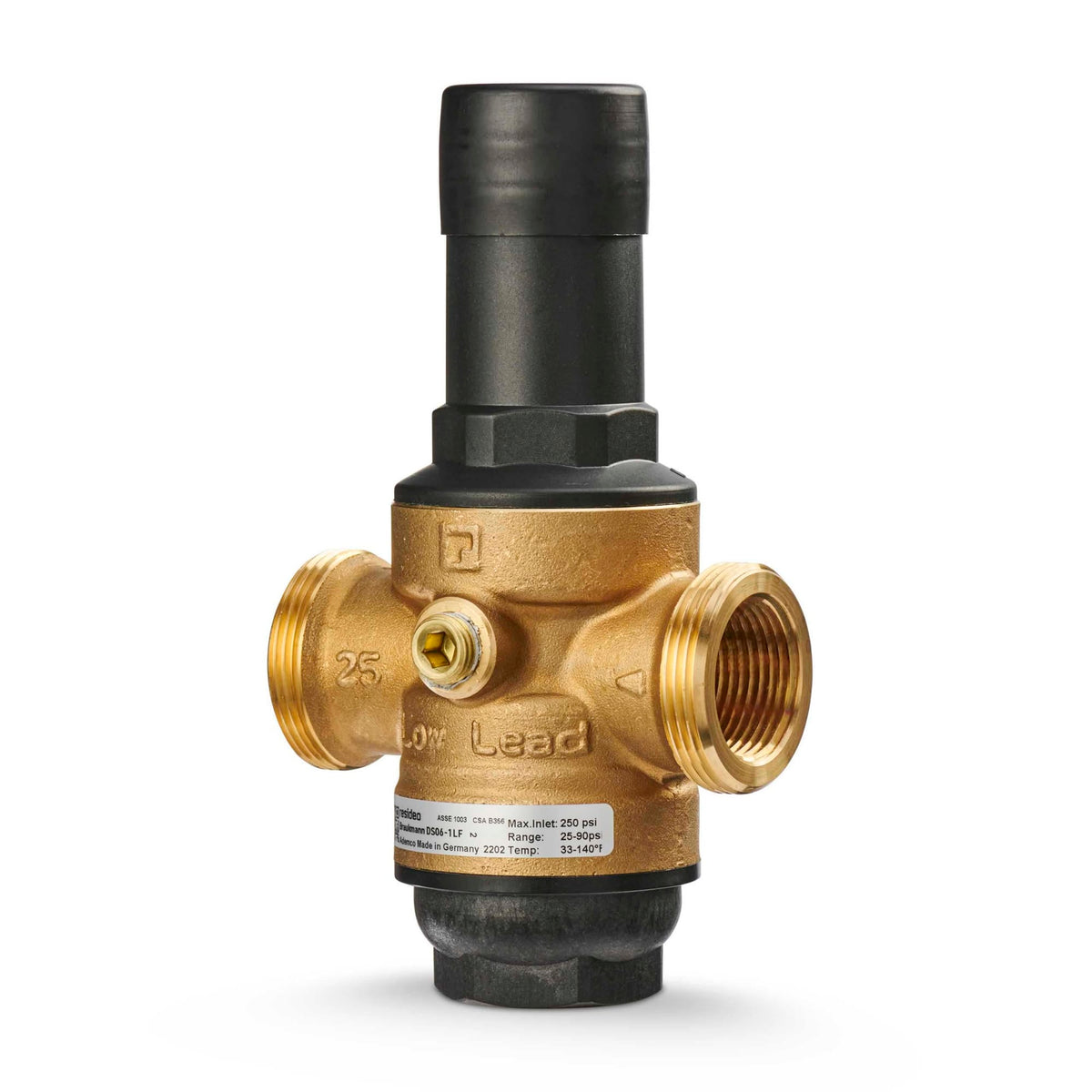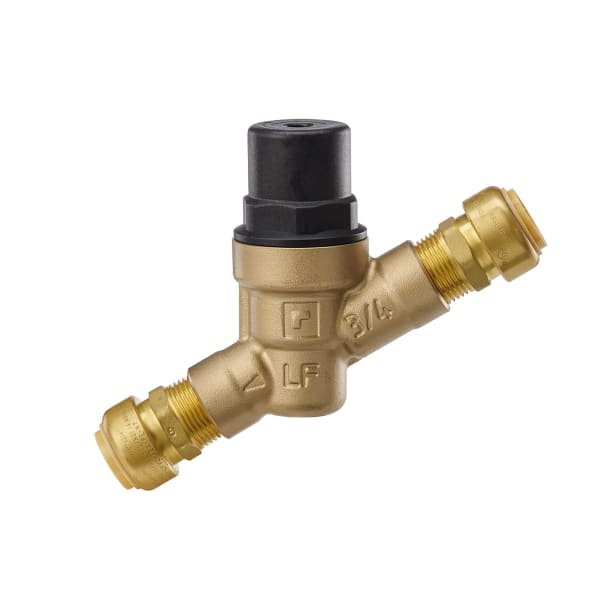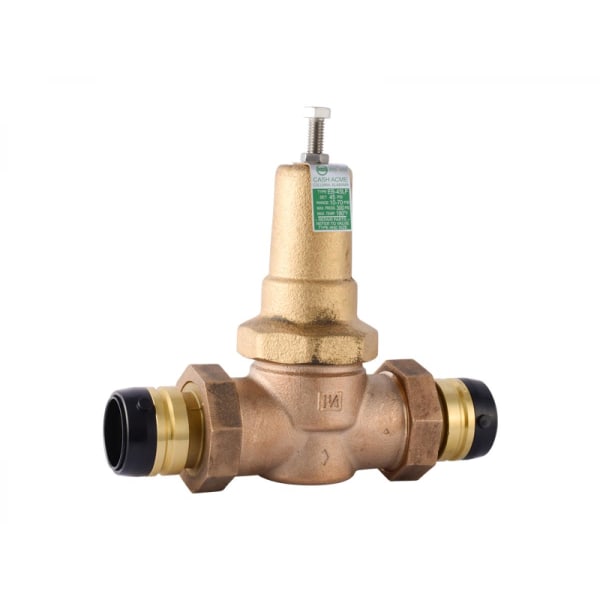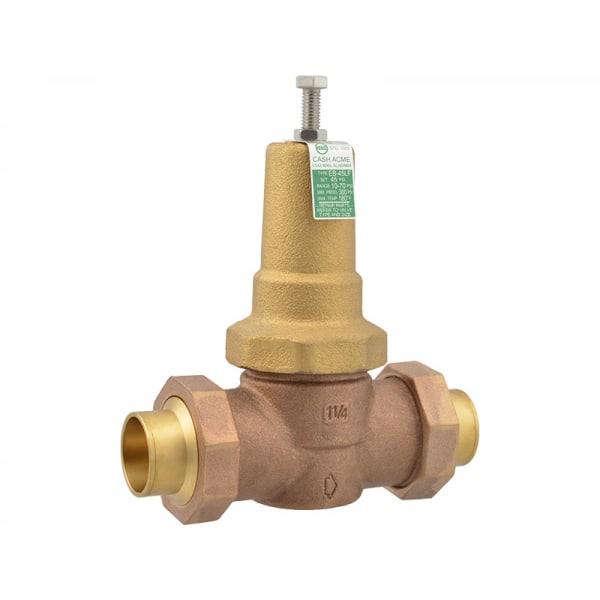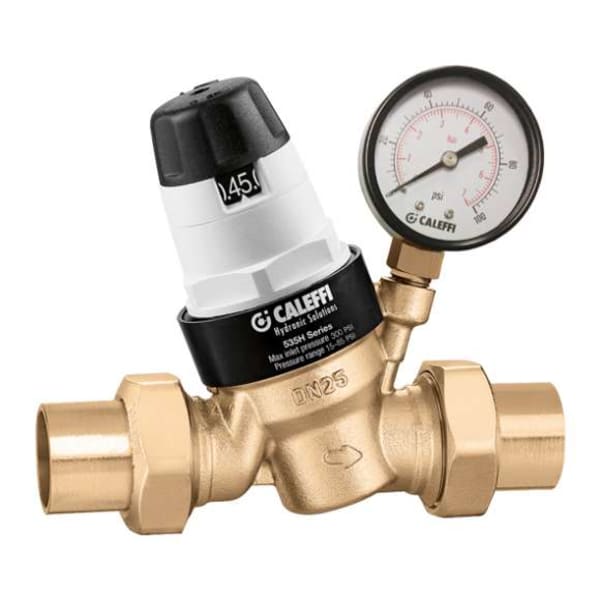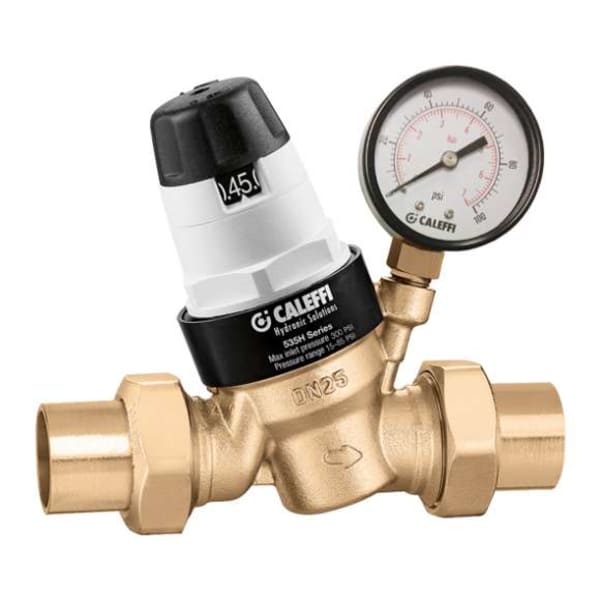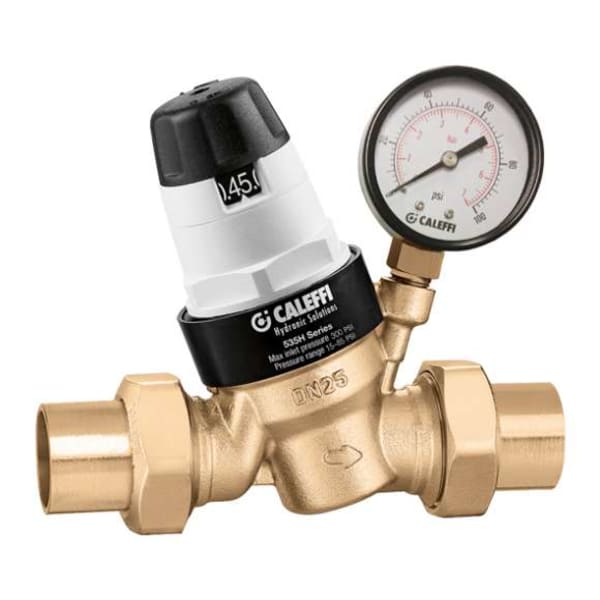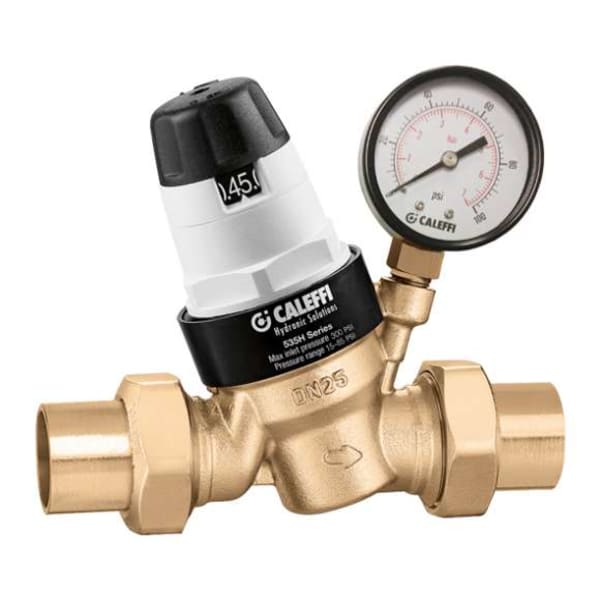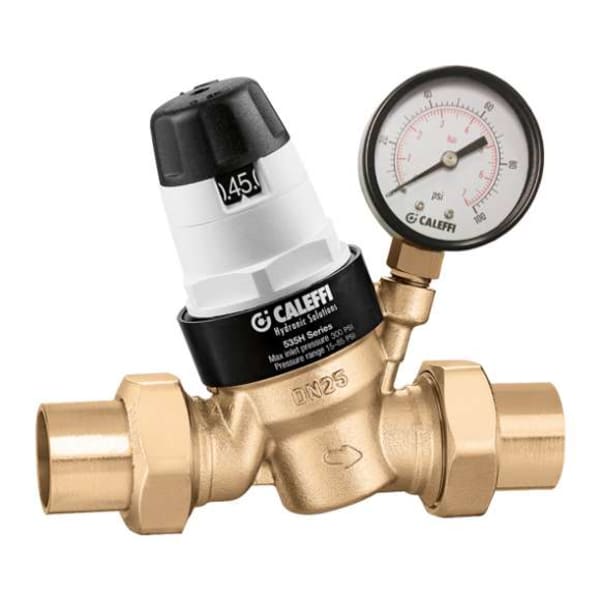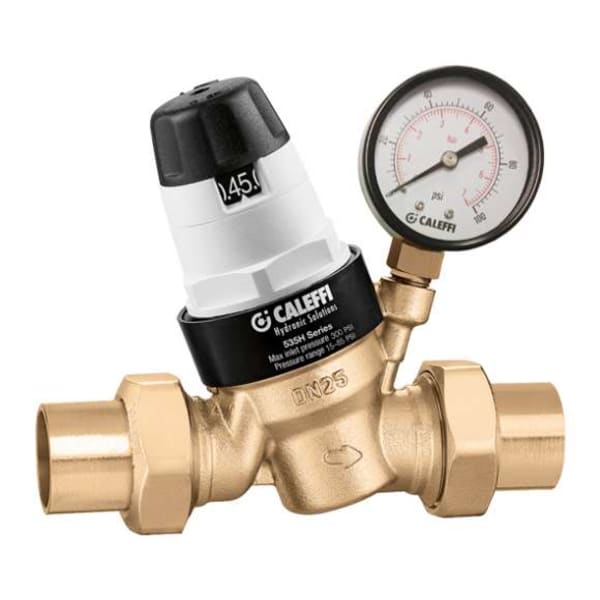
70 water pressure regulators and service parts, 1/2" through 2": Resideo DS05 and DS06 DialSet (32, including six repair parts), Watts 009 series (13), Cash Acme EB45 and F95 (10), Zurn Wilkins 600XL, 70XL and NR3XL (8), Caleffi North America PressCal (6) and one Apollo-Conbraco direct acting valve. The trade calls the device a PRV and the fixture aisle calls it a water pressure regulator; they are the same valve.
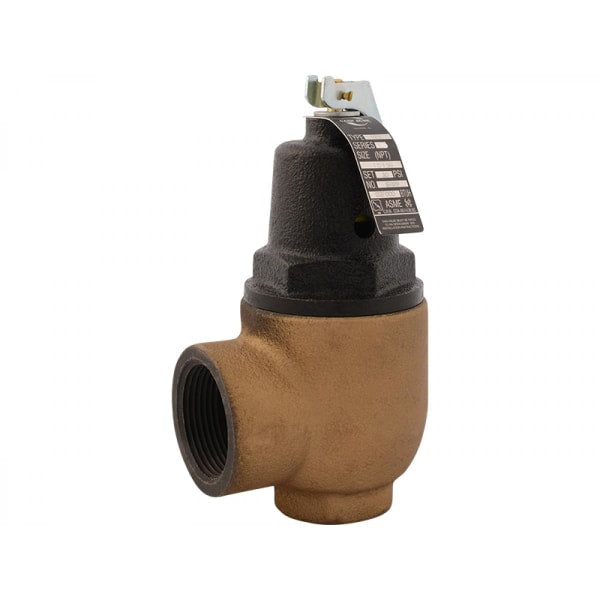
A pressure reducing valve and a pressure relief valve do opposite jobs. A regulator sits on the incoming service and holds downstream pressure at a set point continuously, whether or not anything is wrong. A relief valve does nothing at all until pressure or temperature crosses a limit, then opens and discharges. One is a control, the other is a safety device, and neither substitutes for the other — a building that needs a regulator generally needs both.
Most plumbing codes call for a regulator wherever static supply pressure at the building exceeds 80 psi. Past that point pressure stops being free performance and starts being wear: it is what splits supply lines, cuts fill valve seals and turns a dripping faucet into a replaced cartridge. Measure the street pressure with a gauge before choosing a set point rather than working from the neighborhood's reputation.
Installing a regulator closes the system, and a closed system needs somewhere for hot water to expand. Before the regulator, thermal expansion from the water heater pushed back out into the street main. After it, the regulator blocks that path, pressure climbs against nothing every time the burner fires, and the heater's T&P valve begins to weep — which reads as a failed T&P valve and is not one. The answer is a correctly sized thermal expansion tank put in at the same time, not a second T&P valve.
Adjustment range is a specification, not a preference. The standard range here is 25–75 psi and covers nearly every residential service. Low range valves adjust 10–35 psi and are stocked in 1/2" and 3/4" for services that have to land below what the standard valve will hold. Winding a 25–75 psi valve down to its bottom stop is not the same thing as fitting a low range valve.
Single union against double union is a serviceability decision rather than a hydraulic one. A single union valve is solid on one end, so replacing it later means cutting pipe. A double union breaks loose at both ends and the next valve goes in without touching the piping. On a service entrance buried behind finished wall, the double union is the cheaper part measured across the life of the building.
Ends cover the whole range — female NPT, solder union, press, PEX-A cold expansion and push-to-connect. The connection is a separate choice from the valve. The Resideo DS05, the DS06 DialSet and the Cash Acme EB45 are each stocked in several end configurations of one valve body, so choose the body for the pressure job and the ends for the pipe you are joining. Where Watts states the seat, it tracks size: polymer seat in 1/2" through 1", stainless steel seat in 1-1/4" through 2". The six Caleffi PressCal valves are listed to ASSE 1003 and carry an integral pressure gauge, in NPT and in press, 3/4" through 1-1/4".
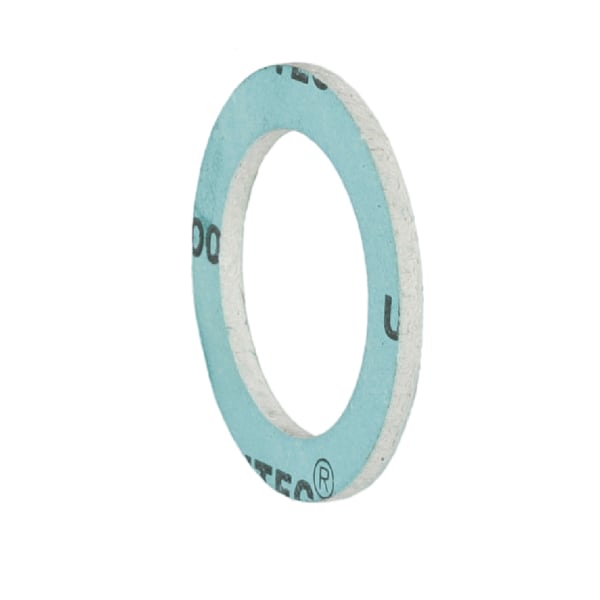
Rebuild before replacing. Six of the 70 are service parts rather than valves: Resideo union kits for the DS06 and FK06 in 3/4", 1" and 1-1/2" NPT plus 3/4" sweat, a low lead replacement filter bowl with O-ring for the 1-1/2" and 2", and a union seal washer for the 1". A regulator that will not hold its setting is often a fouled strainer or a cut seal rather than a failed body — the DS06 carries its strainer in a replaceable bowl for that reason.
Regulators sit alongside backflow preventers, check valves and relief valves in our valve reference guide.