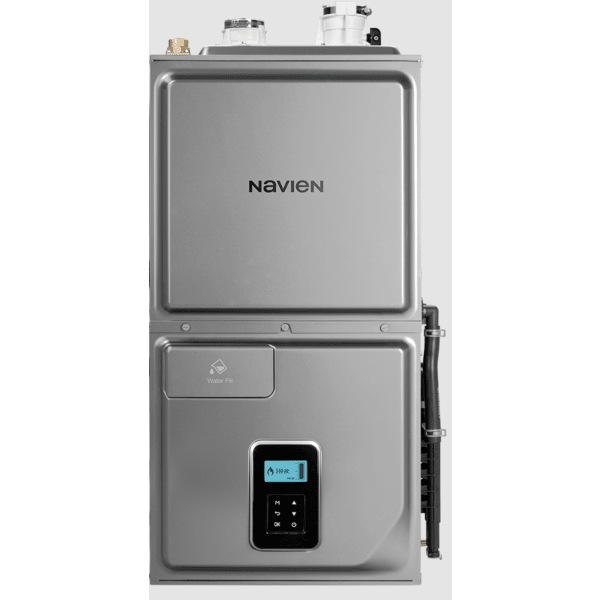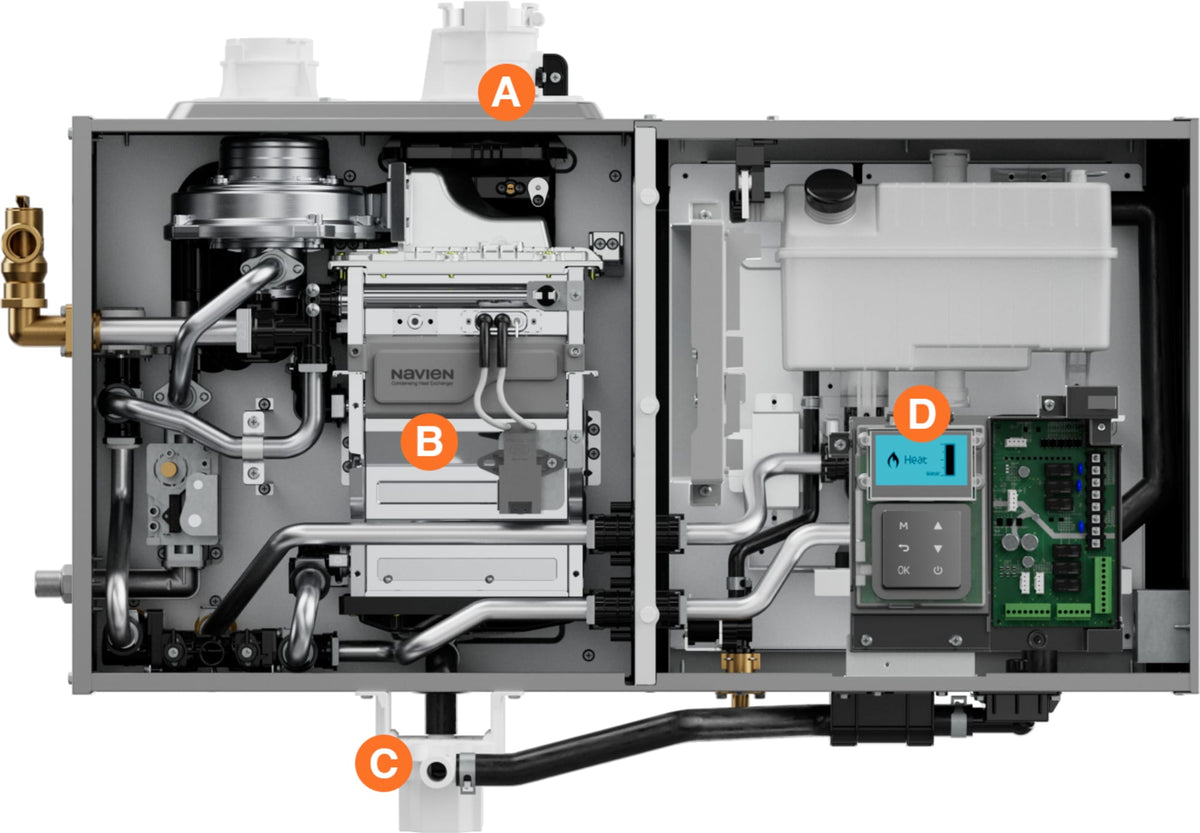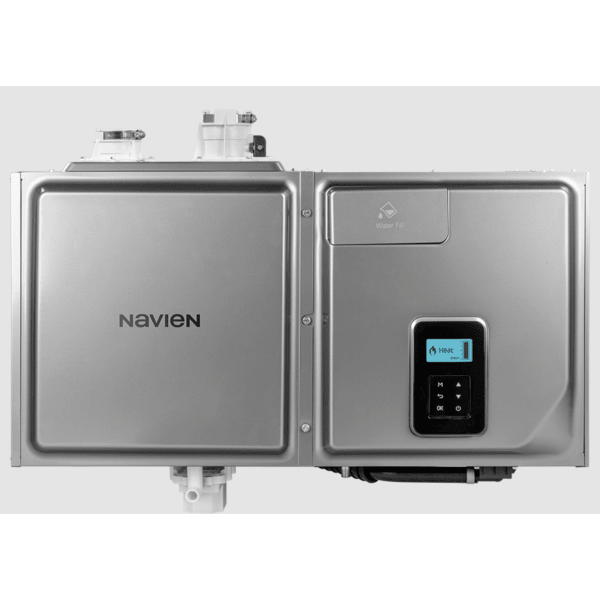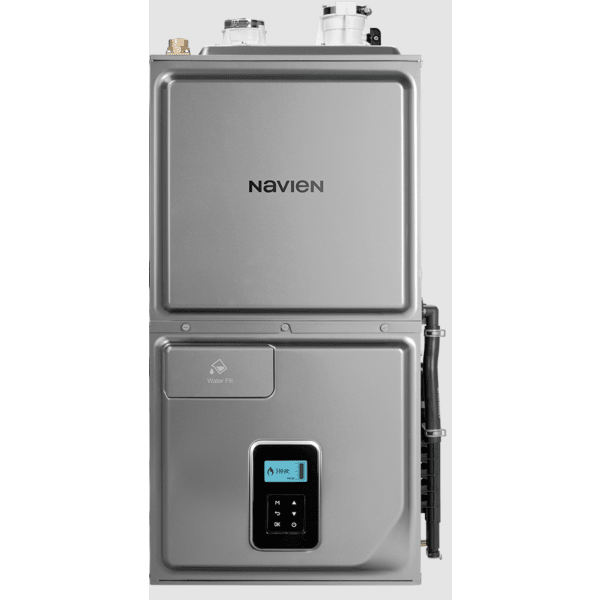
Condensing hydro furnaces from Navien: 14,000 to 100,000 BTU, in upflow and horizontal cabinets, for natural gas or propane.
A hydro furnace heats the air through water. Instead of a flame-heated exchanger sitting in the airstream, a condensing burner heats water and a coil inside the cabinet hands that heat to the duct air. The practical consequence is that the combustion side and the air side are separate systems — a cracked-exchanger failure does not put flue gas into the supply air the way it can in a conventional furnace.
Modulation is the number worth comparing. The 14,000 to 100,000 BTU unit covers a little over a 7:1 range and the NPF700-060U3BH covers 9,000 to 60,000. A furnace that can drop to low fire runs long and gentle on a mild day instead of short-cycling, and that is where both comfort and seasonal efficiency come from — not from the peak rating.
Upflow or horizontal is the cabinet, and it decides the install. Upflow discharges out the top, for a basement or a mechanical closet ducted upward. Horizontal lies on its side for an attic or a crawlspace. Pick the orientation the space actually allows before anything else.
Condensing means a drain and new venting. A condensing appliance pulls flue gas below its dew point, so it produces acidic condensate the whole time it fires. Plan a condensate drain and a neutralizer where the receiving pipe or the local code calls for one. It also needs sealed venting sized for a condensing unit — the existing flue from an atmospheric furnace is not reusable.
Related: Gas tankless water heaters · Heat pumps · Zone valves